Sonje Ayiti Prevention of Gender Based Violence Programme (GBV)

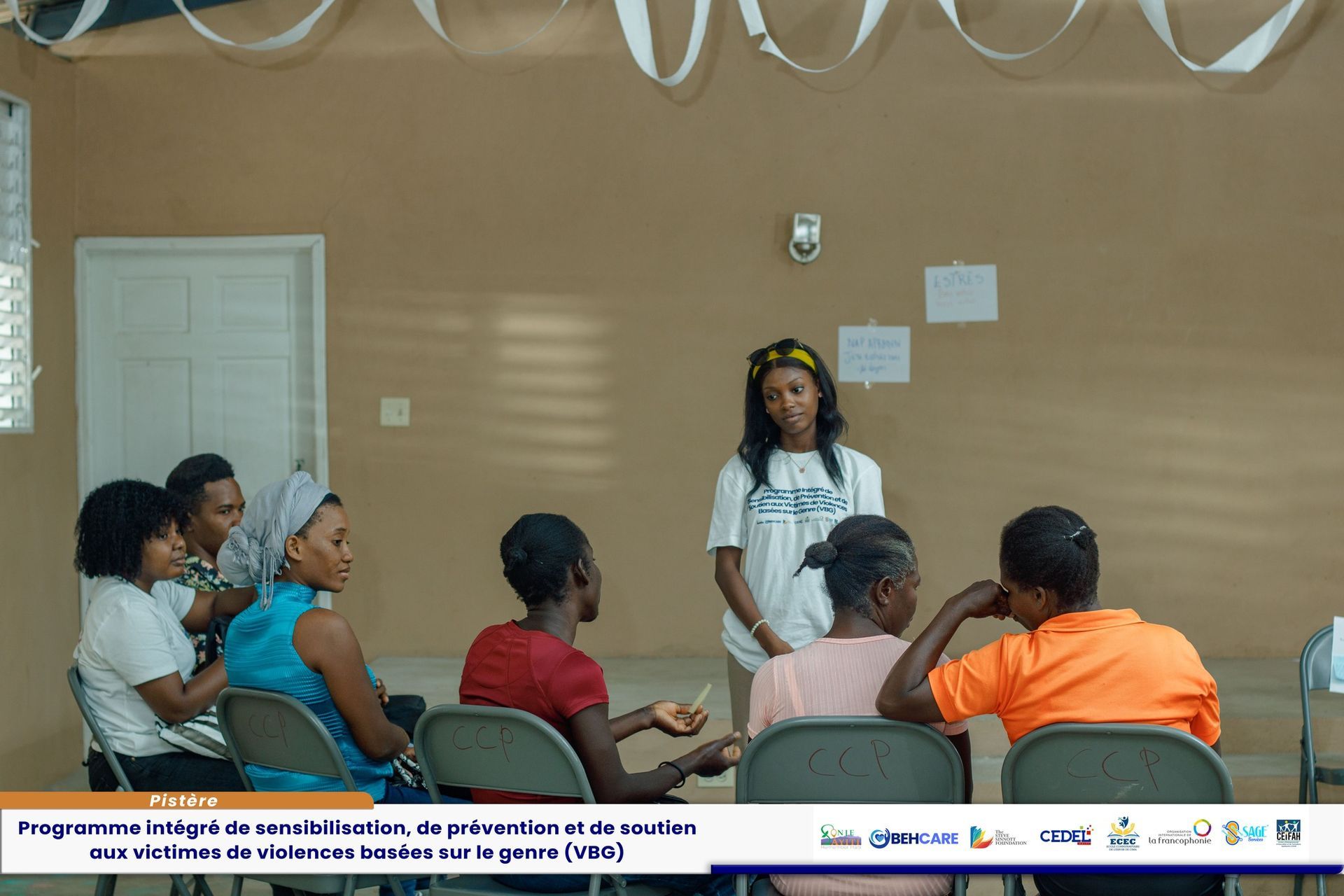
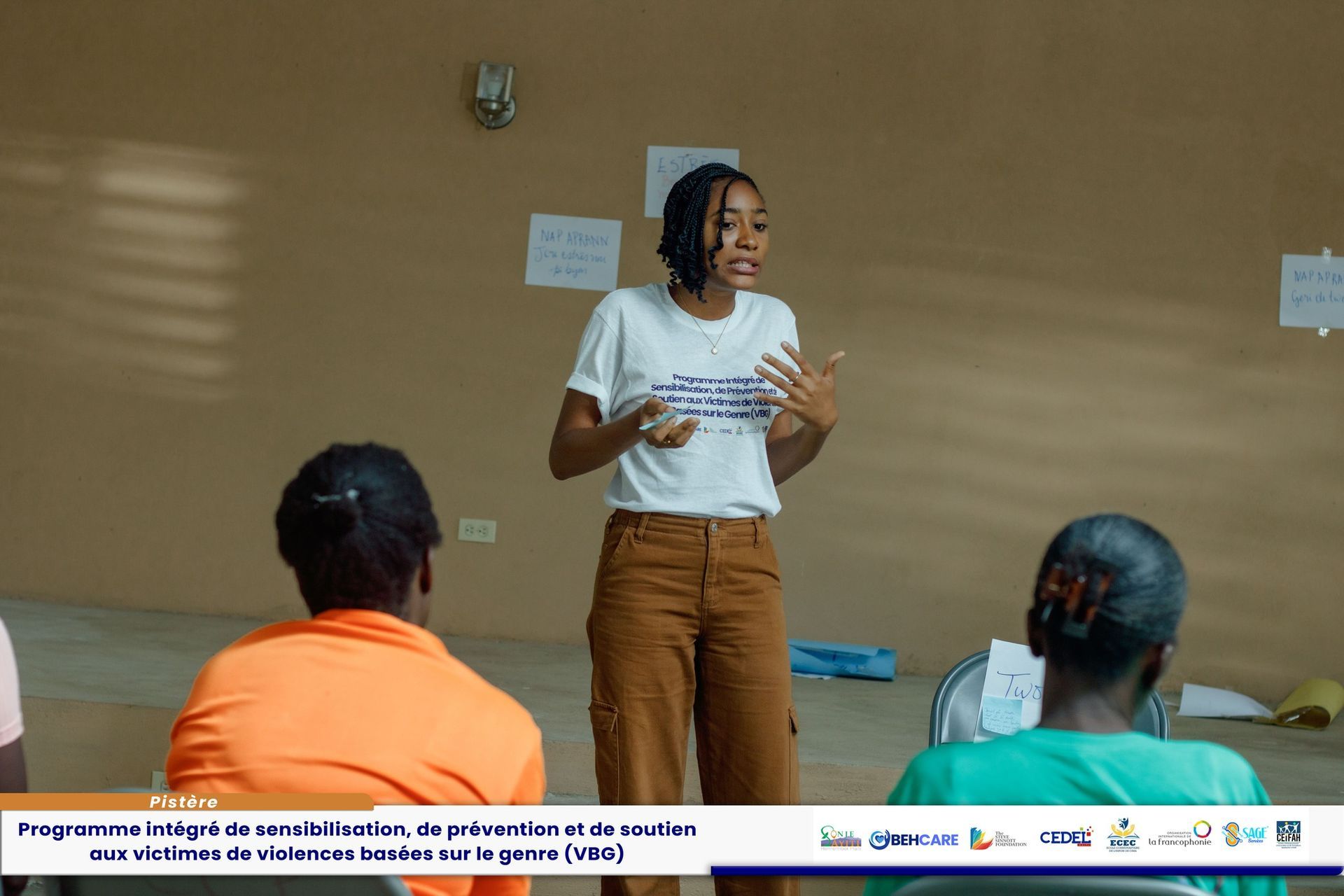
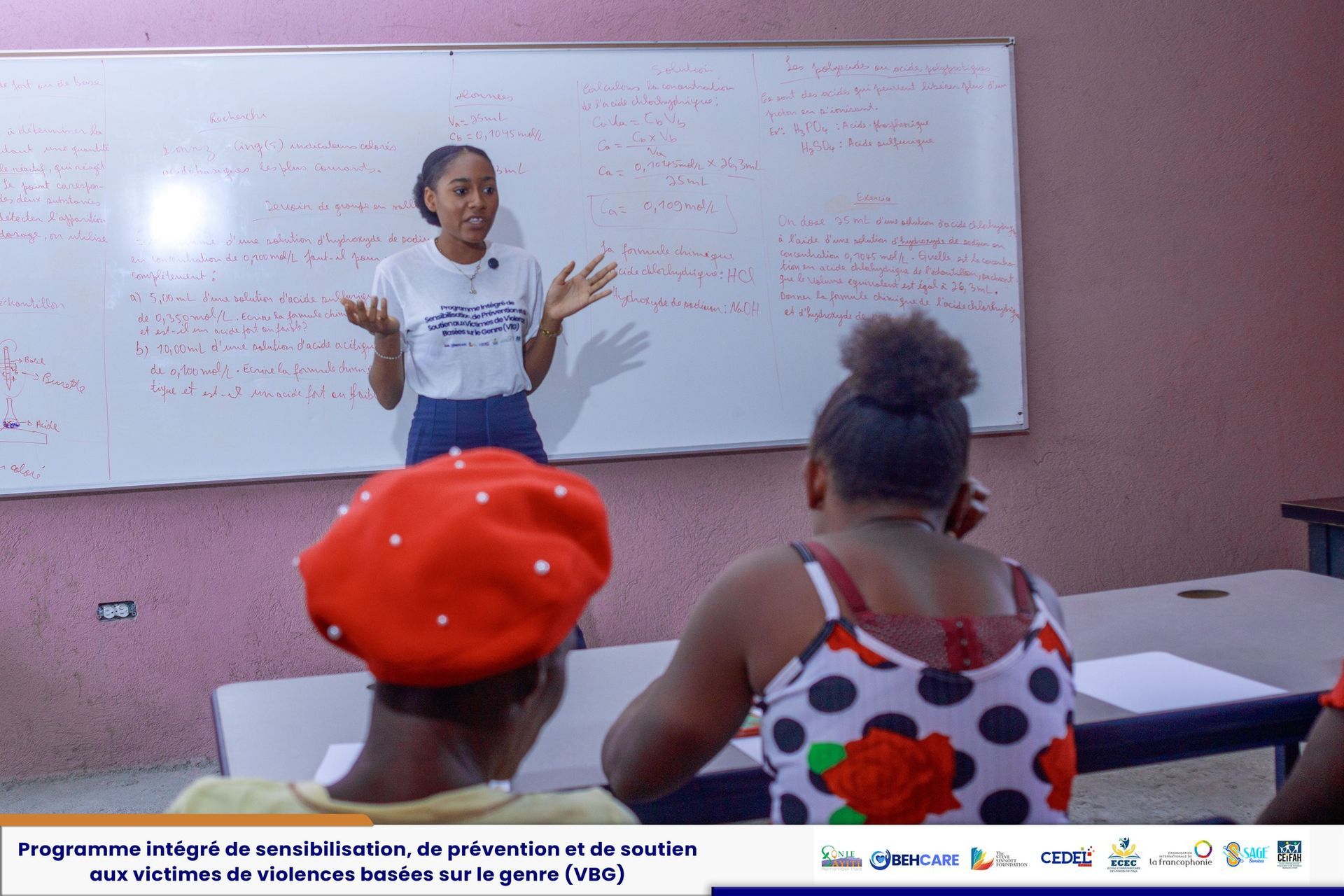
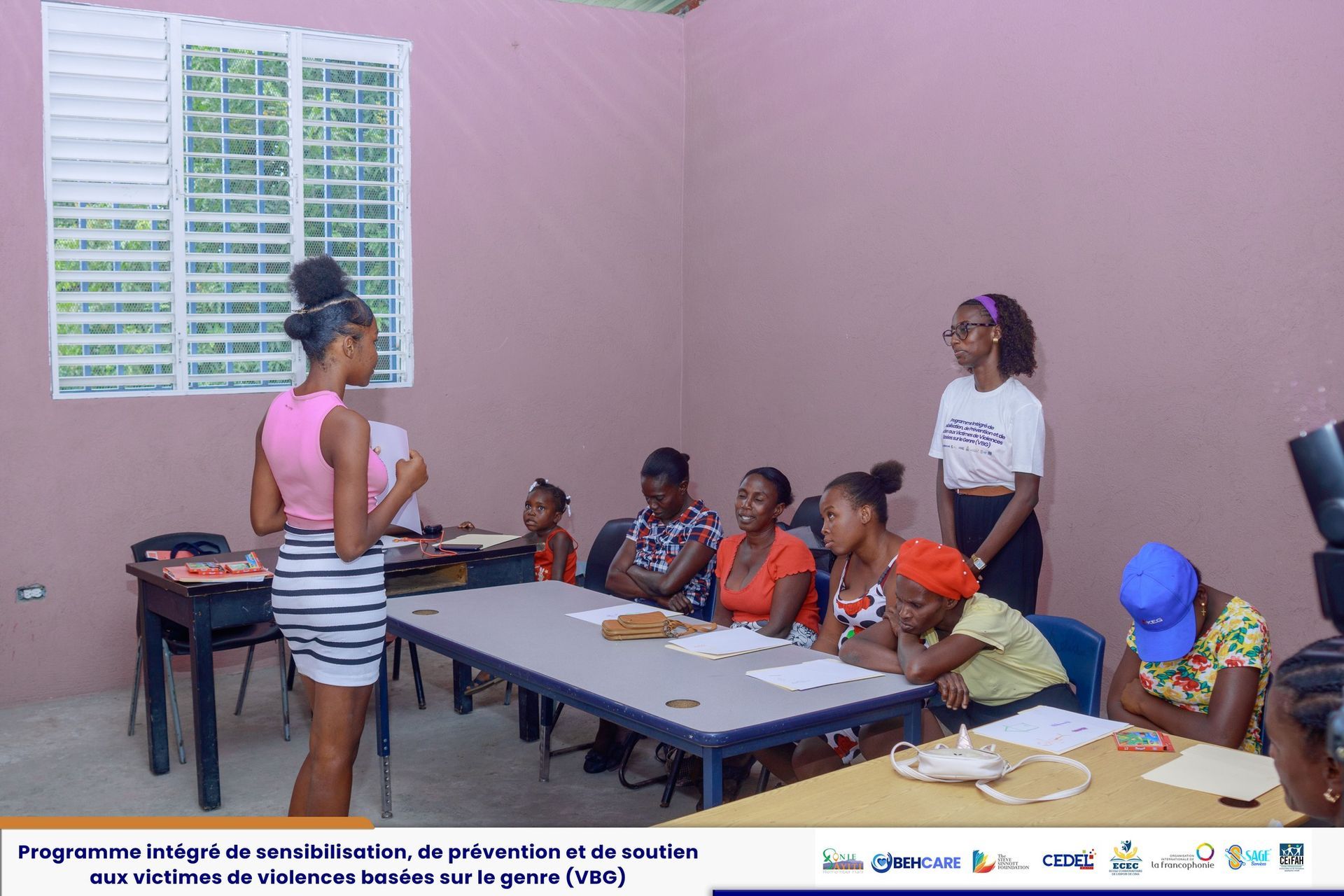
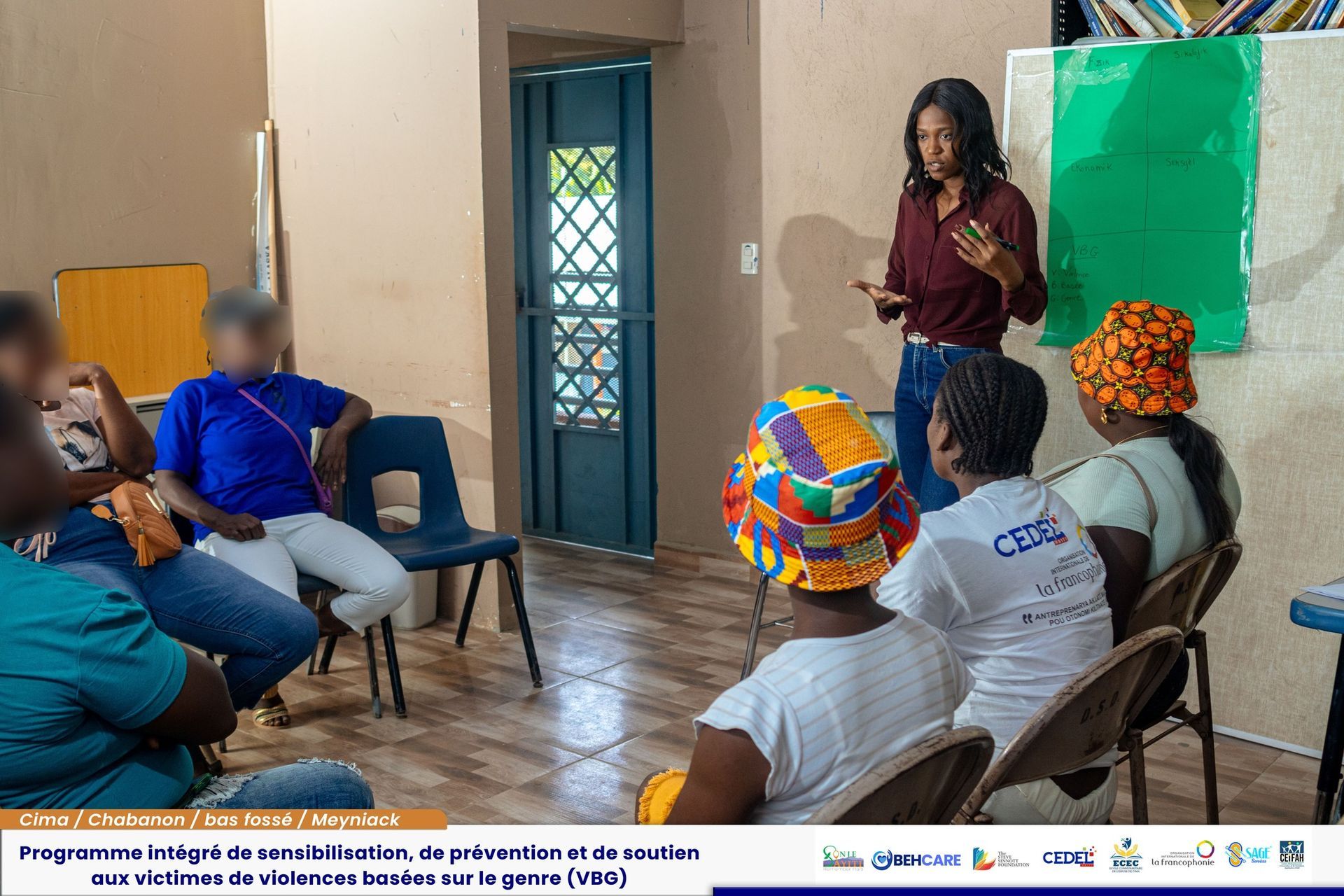
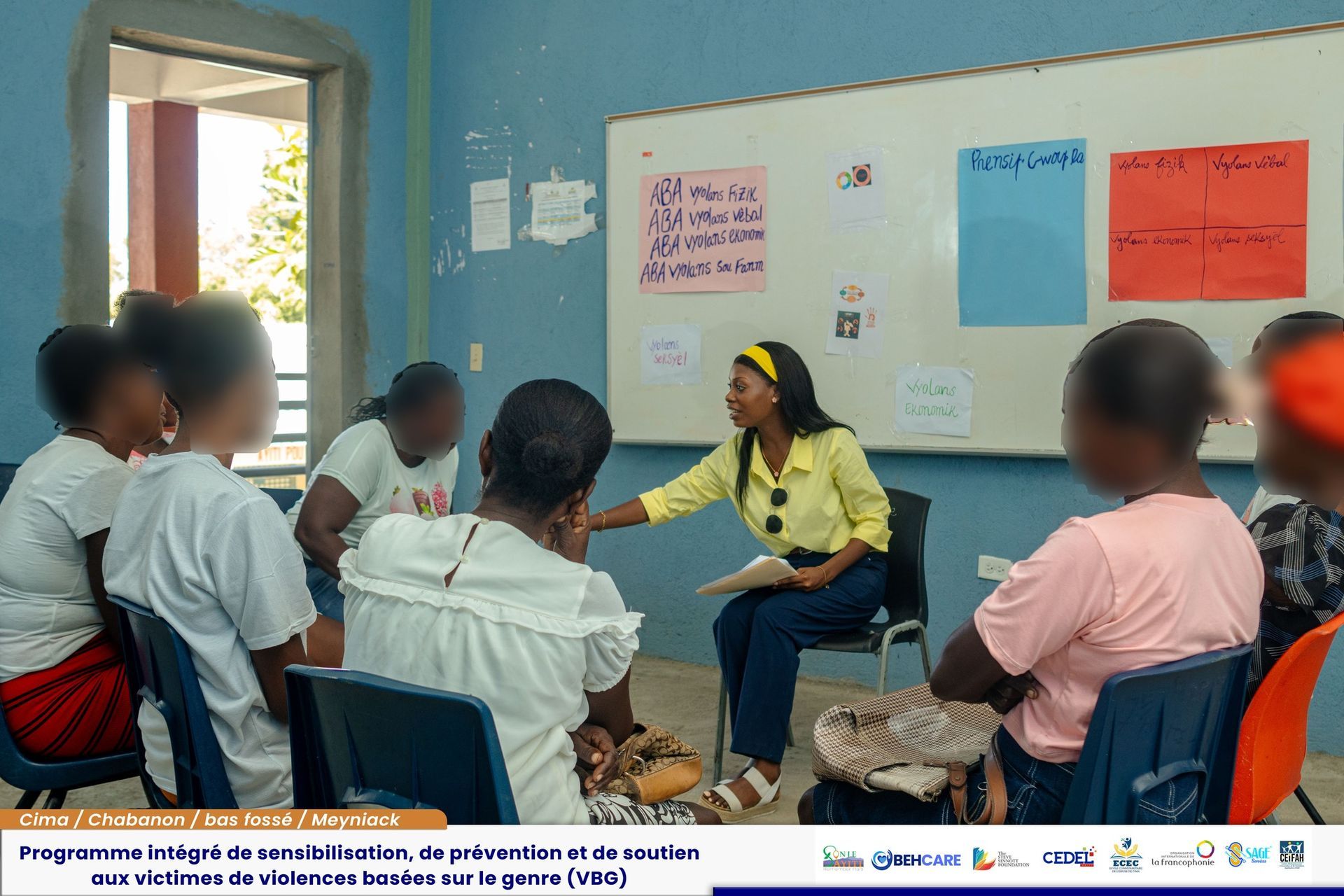
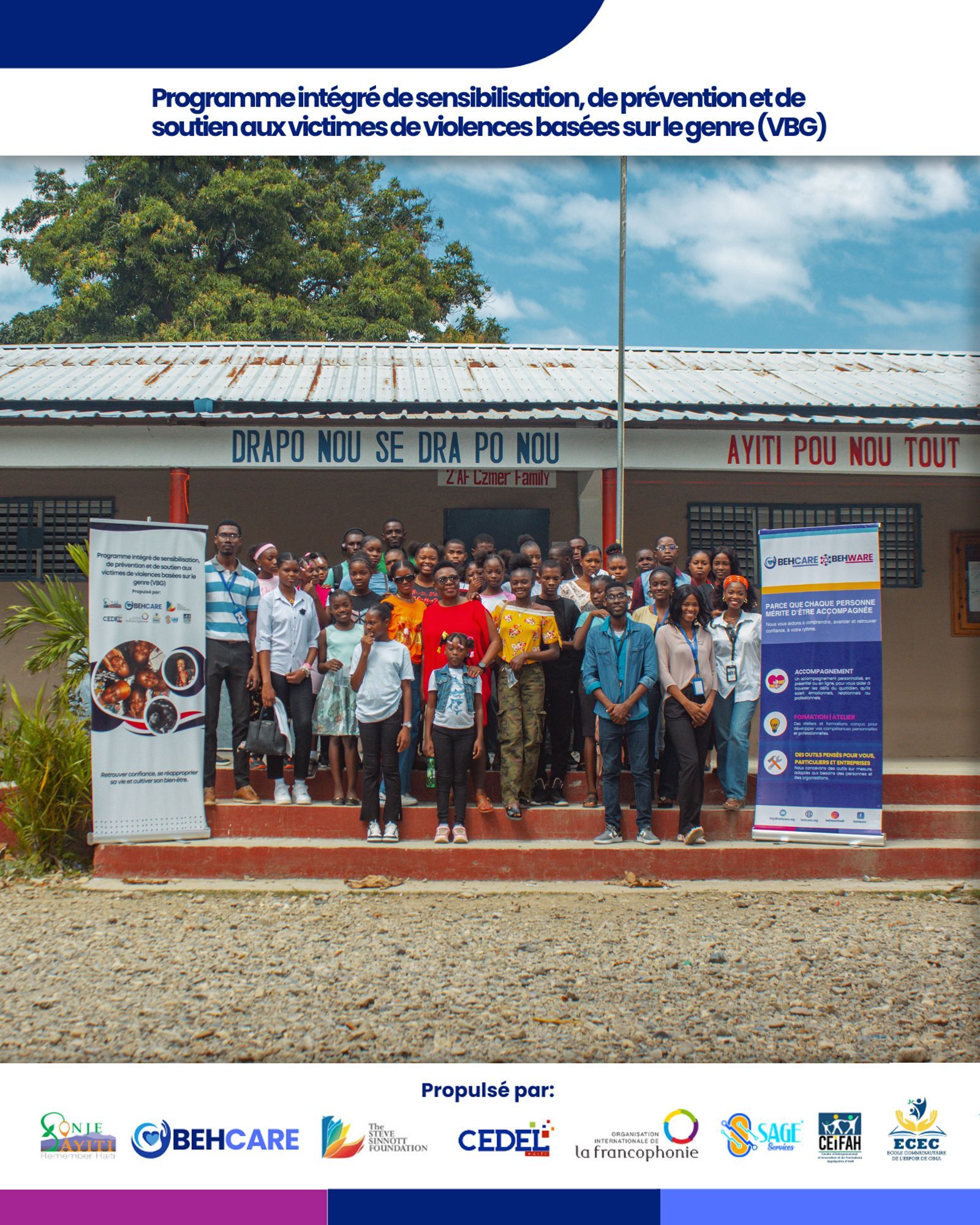
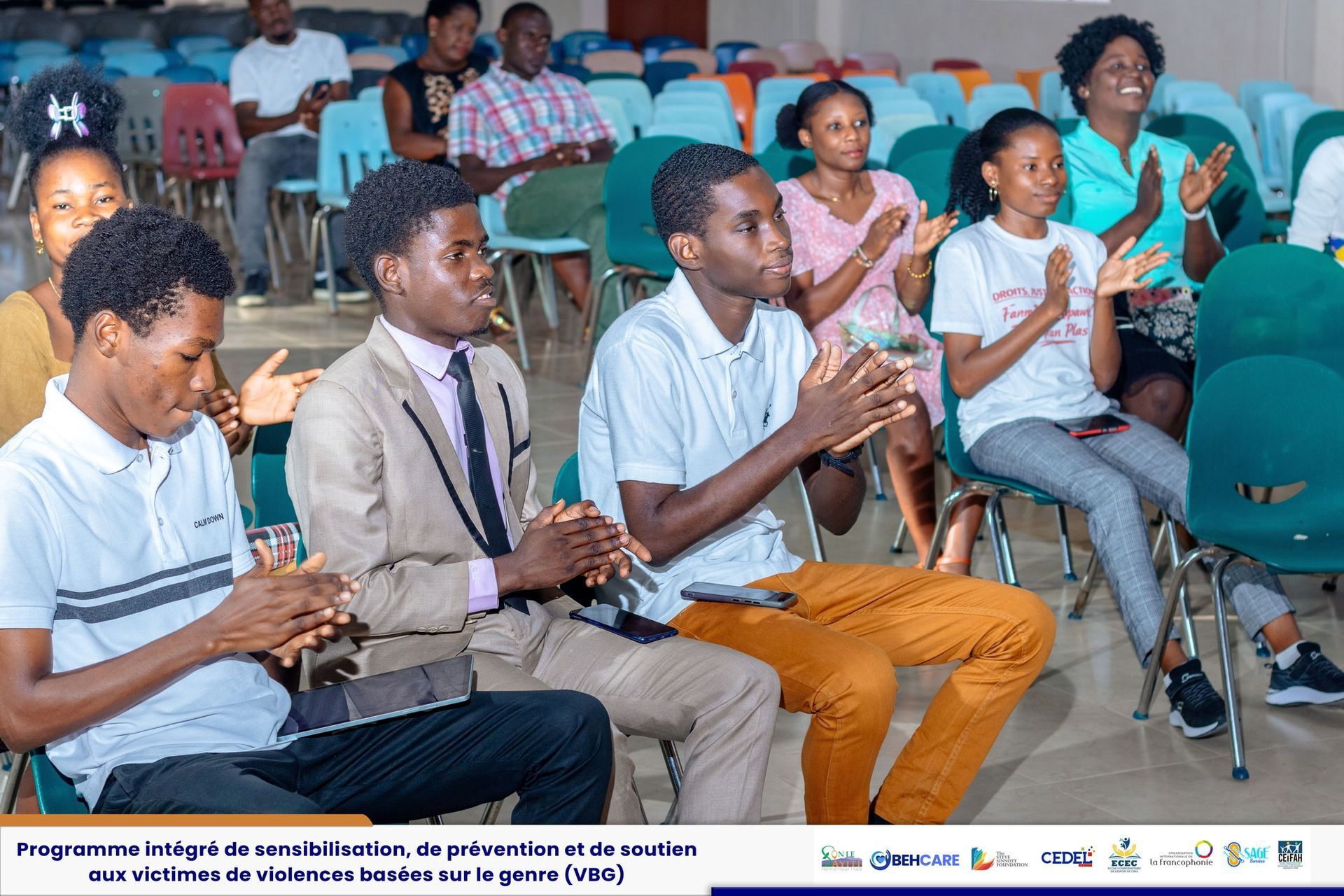
The Steve Sinnott Foundation, as a staunch advocate to combat GBV, support Sonje Ayiti to conduct a series of activities for 3 months in partnership with local mental health Youth Organisation BEHCARE – “Be Human Care”: humanizing care. As part of the Integrated Programme for Community Awareness, Prevention, and Support for Victims of Gender-Based Violence , a series of activities are being organised to raise community awareness and strengthen the protection, dignity, wellness, and recovery of affected individuals.


This initiative aims to:

- Prevent gender-based violence

- Raise community awareness

- Provide tailored support to those affected


Awareness campaigns, training sessions, and support groups are implemented in schools, churches, and other local institutions to foster a safer and more respectful environment for all. Every action counts in fostering strength, hope, and renewal within each person. We follow up with well-being therapy sessions for all of the women who take part in the programme.

  • Slide title

    Write your caption here
    Button
  • Slide title

    Write your caption here
    Button
  • Slide title

    Write your caption here
    Button
  • Slide title

    Write your caption here
    Button
  • Slide title

    Write your caption here
    Button
  • Slide title

    Write your caption here
    Button
  • Slide title

    Write your caption here
    Button
  • Slide title

    Write your caption here
    Button
Gabie Aurel • March 17, 2026
By Shahnaz Akhter April 22, 2026
On a recent trip to Pakistan, I was struck by two contrasting images. In one, school children moved through the chaos of Rawalpindi’s streets, their journey interrupted by traffic, by cows being walked through the road, by the everyday disorder of the city. In another, young children carried heavy bags for street vendors who give them employment; their labour, part of the same urban rhythm but pointing to very different futures. Access to education, as is often referenced in this magazine, is not universal. I reference Pakistan not only because of these scenes, but because it is closely linked to my heritage and identity. Reflecting on what education means, and how I interact with it, has been central to my academic journey. Coming from a family where my parents were not formally educated, education has provided me with opportunities that were not previously available to them. This experience shaped my decision to work in widening participation in the Department of Politics and International Studies at the University of Warwick. One of the projects we developed was the Colonial Hangover Project, designed to explore the everyday legacies of colonialism. The project aimed not only to give school-aged students the confidence to speak back to a curriculum that often remains silent on their histories, but also to create opportunities for experiences they might otherwise not have access to because of their backgrounds. It was through the Colonial Hangover Project that we enabled students to speak at the Colonial Legacies conference held at Coventry Cathedral. Students from across Coventry spoke about their heritage, produced art, and sang gospel songs reflecting their experiences as young people whose families are linked to British history through empire. They spoke about local histories, including the grave of enslaved child Myrtilla, about South Asian heritage, and about the ways colonial hierarchies have shaped relationships between communities, including the persistence of anti-Blackness within some South Asian communities. Over 400 students came together during the day to celebrate their heritage and to speak within the cathedral. Building on this momentum, the work sparked a wider ambition: to ensure that all schools, particularly those in areas of high deprivation such as Coventry, could access sustained opportunities rather than one-off interventions. This led to a drive to connect schools to the UNESCO ASPnet Schools Network, widening access to global learning while embedding students within an international community committed to peace, cultural understanding, and social justice. For a city shaped by postindustrial decline and uneven educational outcomes, this connection mattered. It enabled students to see their local experiences as part of a wider global story. Alongside this, we drew on the Hidden Heroes campaign led by Preet Gill and Tom Tugendhat, encouraging students to identify and celebrate their own heroes within their families and communities. This created pathways for young people to speak in the UK Parliament, bringing together local heritage, global networks, and civic voice. Together, these strands reflected a shared commitment: widening participation not only in education, but in belonging and representation. BY SHAHNAZ AKHTER Associate Director is based in the Department of Politics and International Studies at the University of Warwick, where she works in widening participation and outreach. Her work focuses on creating meaningful pathways for school-aged students from underrepresented backgrounds to engage with higher education, civic life, and global learning.
By Safeena Husain April 20, 2026
Every last girl may want to go to school, but we know that a desire and an aspiration are not always enough. Deep in rural India, society doesn’t always support a girl’s education. Household chores, child marriage, restricted movement outside the house and patriarchy all stand in the way. The system also lets girls down -- secondary schools can be far away and re-enrolling after leaving education can be very difficult. Educate Girls UK was founded in 2016 with a mission to work with local organisations in some of the world’s most vulnerable communities, to find and support girls back into education. We identified Educate Girls (FEGG), an ambitious Indian NGO in Rajasthan and decided to start by backing their vision of every girl in school. Since commencing work in 2007, FEGG has supported over 2 million girls to enrol into government schools and improve their learning by creating a movement of over 23,000 gender champions who have reached the girls the system might have left behind. The Indian government too has introduced enabling policies (Right to Education Act was passed in 2009) and made huge progress in improving delivery and systems. India has near universal enrolment in the primary years with many more girls in school than before the Right to Education Act came into being. Our funding and advocacy support here in the UK and Europe has made a difference. But there still remains a persistent problem in the most marginalised villages in India, and beyond. Millions of women and adolescent girls forced to drop out of school have never returned. Without having passed even Grade 10 (similar to GCSEs in the UK), their life chances are now severely hampered. Further education is a distant dream; skilling programmes inaccessible; even loans to start a small business are all out of reach. As the world aspires to improve the quality of education we cheer on from the side lines. At Educate Girls UK, we want to be supporting the enrolment of girls into systems that deliver the very best foundational literacy and numeracy and equip young people for the 21st century with all its challenges. But, an additional priority for us, right now, is to give the support that girls who have fallen out of the system need, to pass their 10th and 12th grades. We want to see girls given a second chance at securing this aspiration and indeed this basic human right. In the next ten years we will work to support partners like Educate Girls (FEGG) in India who have set themselves a goal to ensure 10 million learners get that second chance. Even if they are already married and have children, cannot access physical schools, live in the most remote villages, or have demands on their time so they can’t attend school full-time, we will ensure that girls get to study, are supported to access learning and complete their secondary education. India is incredibly well placed to demonstrate solutions to some of the world’s most intractable problems given its size and ability to innovate at scale, indeed it has the largest public education system in the world. In supporting Educate Girls (FEGG) in India to scale their work in partnership with the government, we are convinced that we can learn and then share what works for girls and, in turn as a grant maker and advocate in the UK, work for girls everywhere. At decision making tables across the world we want to ensure the importance and potential of educating girls is seen and heard. This is a problem we only have to solve once as an educated girl will likely become a mother who will educate her children. Educate Girls in India is demonstrating solutions that work at scale which could have resonance beyond India’s borders – there are nearly half a million girls who are not in employment or education even here in the UK. Our work at Educate Girls UK is to change the life of girls so they can go on to change the world for girls everywhere. Educate Girls (FEGG), was recently recognized as the first organisation in India to receive the prestigious Ramon Magsaysay Award (often hailed as Asia’s Nobel Peace Prize) and the remarkable story of the organisation’s evolution is told in Safeena’s new book Every Last Girl: A Journey to Educate India’s Forgotten Daughters. BY SAFEENA HUSAIN A social impact leader, Safeena Husain is the Founder of Educate Girls, an Indian non-profit that partners with communities to mobilise volunteers and government resources for girls’ education in some of India’s most underserved and remote regions. In 2023, she became the first Indian woman to be honoured with the WISE Prize for Education for her transformative work in advancing gender equity through education. In 2024, she was awarded an honorary doctorate by the London School of Economics and Political Science (LSE). In 2025, she led Educate Girls to a historic milestone, becoming the first Indian non-profit to receive the Ramon Magsaysay Award, widely regarded as Asia’s equivalent of the Nobel Prize, thereby cementing her place as one of the world’s most impactful social entrepreneurs. Under Safeena’s leadership, Educate Girls has pioneered innovative models that harness the power of community volunteering, most notably through its Team Balika network of over 23,000 community champions who have helped enrol over 2 million out-of-school girls and improve learning outcomes for more than 2.4 million children since its inception. She also spearheaded the world’s first Development Impact Bond in education and led the organisation to become Asia’s first TED Audacious Project. Drawing on her lived experience, Safeena brings a deep understanding of the challenges faced by marginalised communities. Her vision for the next decade is to empower 10 million learners through scalable, community-driven solutions grounded in volunteerism, participation, and equity. “I have never met a girl who said to me I want to stay at home. I want to graze the cattle. I want to look after my siblings. I want to be a child bride. Every single girl I meet wants to go to school.” Safeena Husain, Founder, Educate Girls
By Stefani Tieri Georges April 17, 2026
In the words of Sydney J. Harris, “The whole purpose of education is to turn mirrors into windows.” Few stories illustrate this truth more clearly than that of Ricardinio, a resilient young boy whose life was reshaped by learning, creativity, and compassionate support. Ricardinio is a displaced child living with HIV who once called the streets of Port au Prince home. When armed gangs overtook his neighbourhood, he was forced to flee, leaving behind everything familiar. The trauma of displacement, coupled with the daily realities of managing a chronic illness, left him navigating fear, uncertainty, and isolation. Everything changed when he gained access to the Resource Learning Centre at Cima Community School of Hope based in Limonade, Haïti. Within its safe walls, Ricardinio found stability, encouragement, and a sense of belonging that had been missing for far too long. The centre became more than a place of academic support; it became a catalyst for his healing. There, he discovered a surprising and transformative passion: drawing. What began as a quiet pastime soon unfolded into a powerful means of expression. Art offered him peace where chaos once lived, and possibility where hope had been fading. With guidance from mentors and access to materials he had never had before, Ricardinio started to see a future shaped not by loss, but by talent and imagination. Ricardinio learned to sew, paint and a new language, English. He made the outfit he is wearing in the photo below for a recent fashion show. His journey reminds us that for many young people, particularly those facing profound health or social challenges, that education is far more than curriculum. It is a lifeline to identity, purpose, and renewed hope. When a learning space nurtures the whole child, it turns windows toward new horizons, ensuring that even in the most difficult circumstances, every learner can envision a brighter future. BY STEFANI TIERI GEORGES Programme and Strategy Manager Sonje Ayiti, Limonade Haiti.