Positive Periods workshops start in Haiti
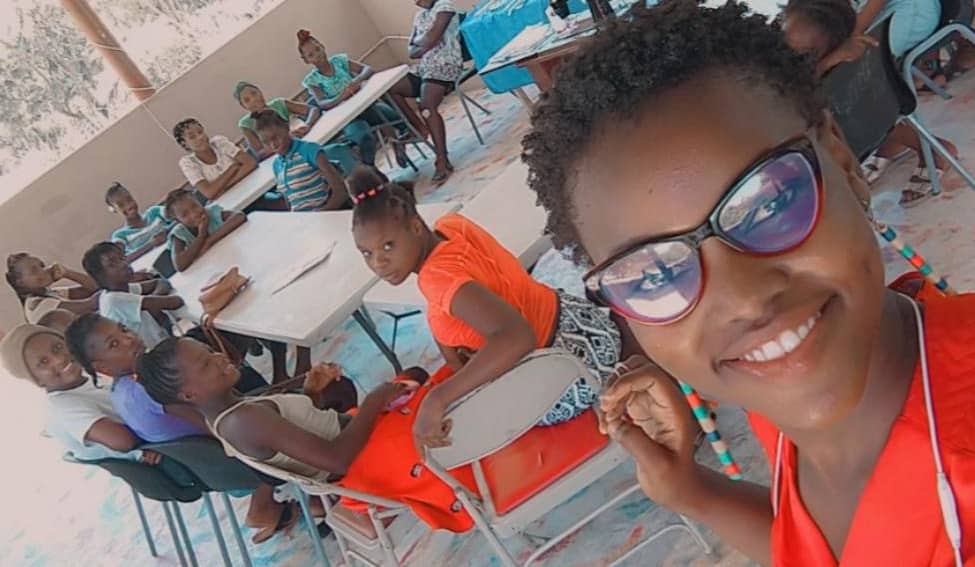
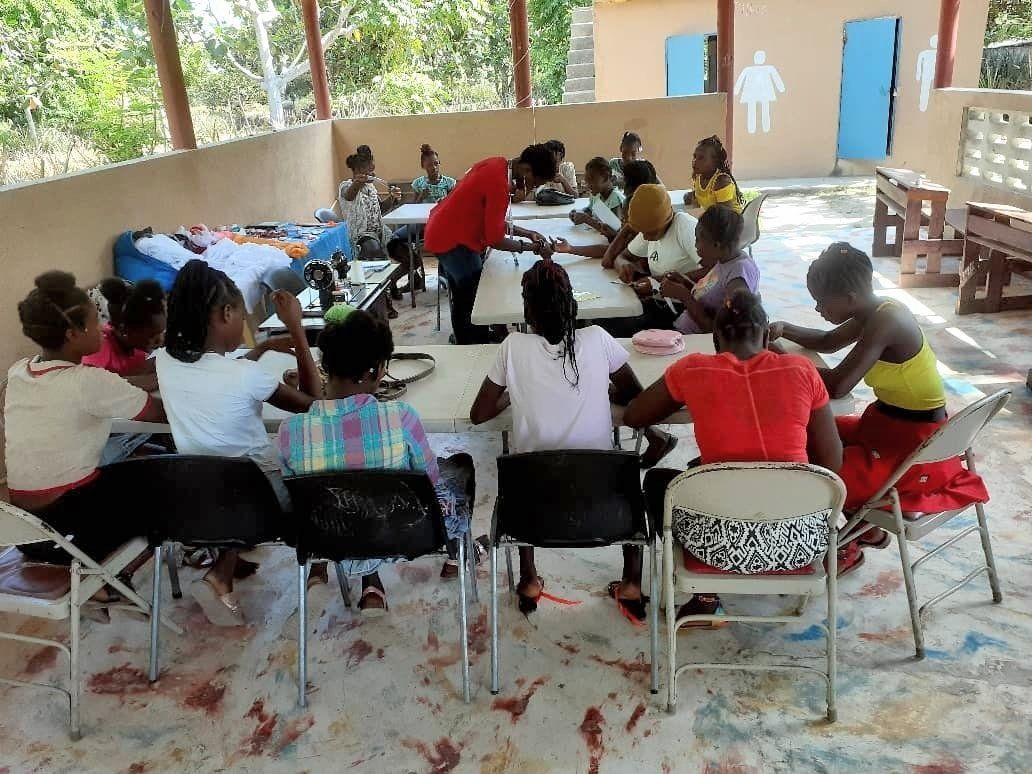
Despite the recent challenges in Haiti at the moment we have been able to progress with our Positive Periods workshops, thanks to a truly amazing team there, undaunted by the current events which you can read about here.


Stelandie Jean-François, is the young woman in charge. She started the session introducing the materials they will be using and the patterns that they will use to create their own re-usable pads. Her students have no experience sowing so they will be learning this skill also. They are very excited to be getting hands on experience making period pads that will help them live a fuller life, and come to school every day.


In the meantime, the school nurses are drafting the training modules that they will be using for the next phase, the educational sessions. This will ensure that girls and young women know more about menstruation and female health. This supports them to better manage and understand their menstrual health and wellbeing.


After this workshop has been delivered, staff can be trained on the workshop, and how to deliver it in their respective schools. This way the knowledge is cascaded through to the wider community.


The feedback we have had so far:


“I am really happy with the team and I am happy I agreed to collaborate on this project.”


“From the day I started, the first thing I wanted to do was motivate them because I know nothing gets done without motivation. After getting the result I wanted I said I got it right.”


“I would also like to thank the entire team for thinking of me to move the project forward, and a big thank you to the Steve Sinnott Foundation for choosing us to launch the program in Haiti.”


We would like to offer our heartfelt appreciation and thanks to the team in Haiti who have been able to go ahead with the workshop, despite the current challenges.
Steve Sinnott • July 23, 2021
By Ed Harlow April 13, 2026
I have always been a believer in the transformative power of education. Education can never be seen solely as a didactic pursuit. It is in many ways an act of love. Helping children to carve out their own place in the world and to understand the complexities of culture, society, history, and anthropology. Education becomes especially vital in times of conflict and unrest. When societies are divided by violence, political instability, or deep social tensions, education offers one of the most powerful tools for rebuilding communities and creating a more peaceful future. Schools are not only places where children learn academic subjects; they must be environments where values, perspectives, and skills are formed. In periods of crisis, the role of education expands beyond knowledge transmission to include fostering tolerance and equipping them with critical thinking skills that allow them to navigate complex realities. One of the most important functions of education during conflict is the promotion of tolerance and mutual understanding. Conflict often arises from fear, misunderstanding, and deeply rooted prejudices between groups. When children grow up hearing only one narrative about others, divisions can become stronger over time. Education can counteract this by exposing students to different cultures, histories, and viewpoints. Through inclusive curricula and classroom discussions, children can learn that diversity is not a threat but a natural and valuable part of human society. Teaching empathy and respect helps young people see beyond stereotypes and recognise the shared humanity in others. In the long term, these attitudes can reduce the likelihood that future generations will repeat cycles of hostility. We can see in conflict zones now that there is often a parallel battle in schools for control of the narrative. Arguments over textbooks in Palestine, for example, are longstanding with different cultural interpretations of certain themes or even individual words or pictures being used to justify political ends. Conflict can create feelings of fear, confusion, and powerlessness, particularly for young people. Schools can provide a sense of stability and normality when much of life feels unpredictable. In addition to this emotional support, education helps students understand the social, political, and historical forces shaping their circumstances. By learning about how societies function, how conflicts arise, and how they can be resolved, children gain a clearer sense of their role as members of a community and as citizens. This understanding empowers them to imagine a future beyond the conflict they are experiencing and to see themselves as participants in rebuilding their societies. Another key aspect of education in times of unrest is the development of critical thinking skills. In environments marked by propaganda, misinformation, and polarised narratives, the ability to evaluate information carefully becomes essential. This is especially vital in the modern world with the proliferation of social media, citizen journalism, and algorithms which are designed to reinforce and amplify the worldview of the user or to promote violent or extreme material. Children and young people who learn how to question sources, analyse arguments, and consider multiple perspectives are far less likely to be manipulated by extremist ideologies or false information. Critical thinking allows individuals to move beyond simplistic explanations and to recognise the complexity of social and political issues. This skill is crucial not only for personal decision-making but also for the health of democracy. Furthermore, critical thinking encourages dialogue rather than division. When students learn to examine ideas thoughtfully and listen to differing opinions, they become more capable of engaging in constructive discussions. This ability is particularly important in post-conflict societies where reconciliation and cooperation are necessary for long-term peace. Instead of reacting with hostility to disagreement, educated individuals are more likely to seek understanding and compromise. We must build education systems with this in mind. Many curricula and systems have focused on standards and testing to the detriment of true critical thinking. With the rapid onset of AI and the proliferation of algorithm-driven information access, it is more vital than ever that critical thinking, media literacy, social skills, and dialogue are placed at the heart of education and schools. While education alone cannot resolve every conflict, it lays the intellectual and moral foundations that make lasting peace possible. Investing in education during difficult times is not only an investment in individual development but also in the stability and future of entire communities.  BY ED HARLOW NEU PRESIDENT (1ST JANUARY 2026 – 31ST DECEMBER 2026) Ed has been a secondary music teacher and head of department at Highgate Wood School in London for nearly 20 years. Elected to the National Executive in 2021, and as Junior Vice-President in 2024, he has helped shape policy, taking a particular interest in restoring the arts and creative subjects in the Curriculum.
By Rebecca Ocran Abaidoo April 13, 2026
The issues that affect girls’ education and future life prospects are seemingly trivial to those who have not come face-to-face with the reality of those who come from poor families. Some families in both rural and urban Ghana cannot afford $2 (two dollars) a day to provide food for the families, not to mention such families also provide disposable sanitary pads for their girls to use during that time of the month. The disposable sanitary pad is categorised as a luxury good, hence it attracts high import duty, making the least priced containing 8 pieces (eight) of pads selling at $2 (two dollars) at the current exchange rate. This situation has made the disposable sanitary pad a commodity unaffordable to most girls from poor and average homes in Ghana. Menstruation and its related issues vis-à-vis sanitary conditions in schools are a pressing concern in my country, Ghana. The situation impacts the attendance of adolescent girls at school so severely that the cumulative effect over a period of ten years (the number of years a girl would spend schooling between Junior High and Tertiary levels) is unimaginable. The stigmatisation that girls experience during that time of the month and the fact that sanitary pads remain a luxury item for the majority of girls who come from poor families pose a significant barrier to the education of girls and their empowerment. Many schools in Ghana lack sanitary facilities, not to mention access to changing rooms for girls and water. As we (NAGRAT with support from Steve Sinnoff foundation) took girls and Teachers through training, we learnt at first hand that some girls used unhygienic materials such as leaves, newspapers/other papers to manage their menstruation leading to health risks, leakages and overall discomfort, it was observed from interactions with school girls that majority of them absent themselves from school at least five days in every month, some even dropped out eventually because they could not just catch up with academic work. Teaching girls and Teachers how to produce something decent, affordable and effective is truly liberating. Girls can go through their cycles with dignity and no discomfort. Girls we have trained so far can go to school throughout when schools are in session, and prepare adequately for the world of work and life in general. A simple solution! Great Results BY REBECCA OCRAN ABAIDOO NATIONAL GENDER COORDINATOR NATIONAL ASSOCIATION OF GRADUATE TEACHERS – GHANA
By Ann Beatty February 14, 2026
On 23rd January at the Cima Community School of Hope (ECEC), the first workshop was held with the first group of students as part of the STEM program. This activity marks a promising start to the program's implementation. STEM (Science, Technology, Engineering, and Math) is crucial for children because it fosters critical thinking, problem-solving, and creativity from a young age. It nurtures natural curiosity, helps children understand the modern world, and builds resilience through hands-on experimentation. Additionally, early STEM exposure prepares them for future academic and career success. A total of 20 students participated in this first session. The session focused on a general presentation of the importance of computer programming in today's world. The students were also introduced to the Scratch software interface, an educational tool well-suited for teaching children programming. This initial experience went smoothly and generated considerable interest and strong motivation among the students.