Inspiration for your human rights artworks from Myah Jeffers

Inspiration from artist Myah Jeffers, for our global competition that platforms youth voice on human rights - The World I Want To Live In: Human Rights Education - Learning through Creating. Remember to enter by the 1st June.

Myah Jeffers is a Barbadian-British award-winning documentary and portrait photographer, dramaturg and director, living in London and working across the UK and internationally.


How Often Do You Truly See Yourself?


How often do you look in the mirror?


How often do you study the details of your face, by taking in every intricate detail?


How often do you look into your own eyes and experience the power of your own gaze?


How often do you allow yourself to deeply consider your desires, fears, achievements, and insecurities?


How often do you truly see yourself?


For the past five years, I’ve used portrait and documentary photography as a tool to tell socially, culturally, and politically rich stories. To document truth. Part of the reason why I decided to become a photographer, was the opportunity to intimately study a person and to mutually engage in a vulnerable practice.


I always seek to create an environment where the person I’m photographing feels comfortable enough to share themselves in their entirety. To allow themselves to be seen. By acknowledging someone’s existence through taking their portrait, I’m able to honour the truth of who they are at that moment. Documentation is incredibly important because it also allows me to show people how I see them, which can often help them to further understand themselves.


However, I recently realised that I wasn’t doing the same thing for myself. I wasn’t giving myself space to honour my truth or to see myself for who I was. I began to understand that truly seeing yourself helps to gain a deeper sense of empathy for not only yourself but also for others. Empathy has the power to revolutionise our personal relationships, as well as combat inequality, prejudice, and conflict.


The dots were beginning to connect. Standing up for justice has always meant using photography as a weapon against racism, classism, sexism, etc, but I began to realise that it also meant understanding who I was within that context. So, I decided to set myself a challenge. A challenge that would make me extremely uncomfortable and vulnerable, but a challenge I knew I had to take. I gave myself the task of taking a series of selfportraits.


Below is an image from the self-portrait series, using a technique called multiple exposure. I wanted to capture the moments when I have felt overwhelmed by life and instead of drowning under that weight, I decided to acknowledge those vulnerable parts of myself. This helped me to further understand those closest to me, who were also dealing with difficult emotions. It led

to a deeper sense of empathy for myself and others.
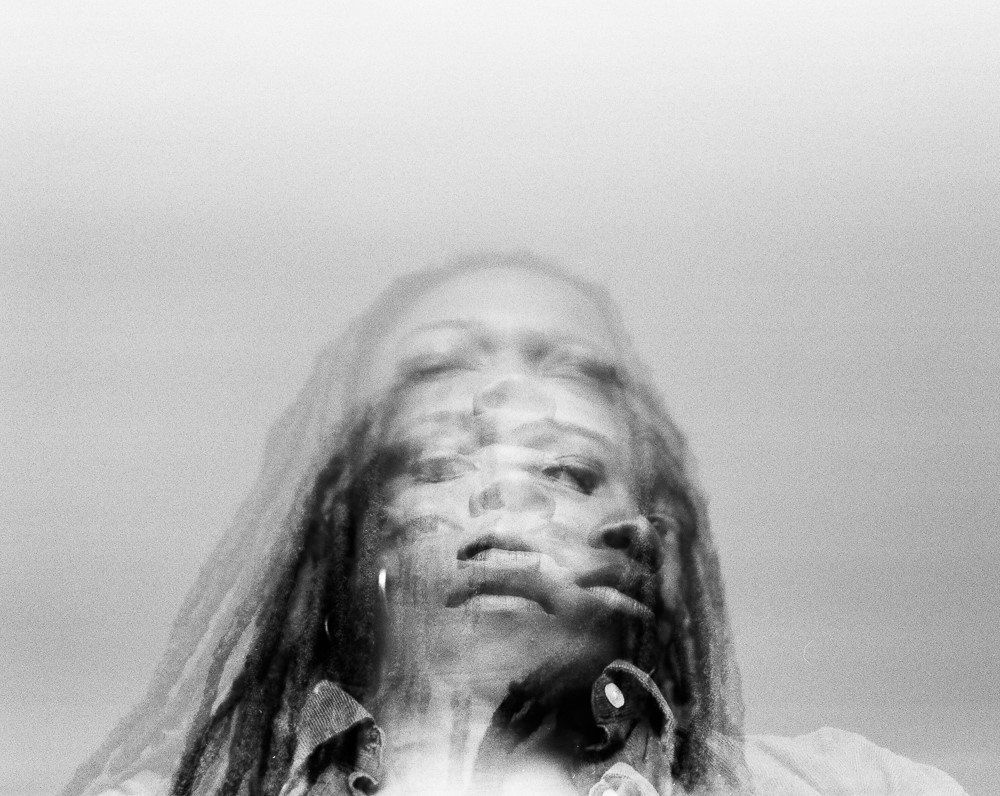


I now challenge you to take a step towards truly seeing yourself, in whatever way you feel is right for you.


The challenge is to take a self portrait and think about the following things:


  • How will you set up your space?
  • Will it just be your face, half body or full body?
  • Will you hold the phone or set it on timer?
  • What props will you use? If any?
  • What type of light will you use? A lamp? Natural light from window? Fridge light?
  • Will you look at the camera or away from the camera?
  • What story are you trying to tell with this image?


Good luck! And remember to acknowledge all of the vulnerable or difficult parts of you.


Find out more about Myah Jeffers work here: www.myahjeffers.com


(Taken from our Human Rights competition resource pack)
Myah Jeffers • May 2, 2022
By Laura Griffin May 13, 2026
‘In a single hour vast tracts of shaded woodland became a jumble of torn trees and upturned soil, exposed to the glare of the summer sun. Such land-clearing events are rare, but forests exhibit remarkable resilience in the face of disaster. I’m told that the Chinese character for ‘catastrophe’ is the same as that which represents the word ‘opportunity’. And, the blowdown, while catastrophic, presented opportunities for many species.’ (Wall Kimmerer, 2003: 89). In the context of a volatile, uncertain, complex, and ambiguous world (Stein, 2021) what kinds of education for hope might support children’s and young people’s critical engagement in local and global issues? In the spirit of exploring the possibilities of hope further, this short article focuses on the area of global citizenship and sustainabilityrelated education. It will briefly open by sharing commonalities across pedagogical approaches that take up the concept and act of hope more critically, and close by offering reflective questions for educators, with suggestions for further reading. Perhaps it is a kind of hope that is grounded in the present, in future reimagining(s), in ethical solidarity, and an acknowledgement of our deep entanglement with the living metabolism of planet earth 1 our singular home (UNESCO, 2021); a hope that engages with complex root causes and lived realities of multiple overlapping crises in critically reflexive and contextually relevant ways. As McCloskey notes, ‘Hope can fire our collective imagination and critical consciousness as a mainspring to activism and intervention in the world.’ (2025: 3). Commonalities across critical pedagogical approaches to hope include: Acknowledging the context of a ‘seamless single story of progress, development and human evolution’ (Andreotti, V.D.O., 2021b Relating to social and ecological justice and the wellbeing of people and planet Using participatory, action-orientated and inquiry-based learning processes Exploring diverse worldviews and perspectives Practising grounding in the present with opening up possibilities for change (relational, embodied, response-able 2 ) Experiencing ‘struggle’ in different forms (dialogical, selfreflexive, open-ended) Engaging individual and collective agency, action and activism Looking for lifelong and life-wide learning and unlearning. 1 See ‘Co-sensing with Radical Tenderness’, in Machado de Oliveira Andreotti. 2021a 2 See ‘Crossing Borders’ in 2 Depth Education “Depth Education and the Possibility of GCE Otherwise, 2021b. Source: Andreotti, V. 2021a & 2021b., Atif, A. (2025)., Bourn, D. 2021., Bryan. A. and Mochizuki,Y., 2024., Giroux, H.A. 2025., Meade, E. 2025. Whilst engaging in the concept and act of hope more critically reflect upon: What kinds of education for hope might you explore further and why? How might you provide generative spaces for engaging in diverse worldviews and perspectives? In what ways can you facilitate individual and collective agency? How might you support learners’ practice grounding in the present in order to relate differently? In what ways can you support learners in navigating complex root causes and lived realities of local and global issues? As Chief Ninawa Hini Kui affirms, ‘The future depends much less on the images we project ahead than on our capacity to repair relations and build relationships differently in the present.’ (Andreotti et al, 2023: 73. An invitation for further reading: Transformative Learning for a Sustainable Future . d’Abreu, C., Belgeonne, C., Bourn, D. and Hatley, J. (2025) ‘Transformative Learning for a Sustainable Future’. DERC Research Paper 24. London: UCL Institute of Education. Hospicing Modernity: facing humanity’s wrongs and the implications for social activism. Machado de Oliveira Andreotti, V. (2021a) ‘Hospicing Modernity: facing humanity’s wrongs and the implications for social activism’ , London: Penguin Random House. Development Education and Hope . McCloskey, S. (2025). (ed) ‘Development Education and Hope’. ‘Policy and Practice: A Development Education Review’ , Vol. 41, Autumn. Centre for Global Education, Belfast. Link to and download the full reference list here
By Susan Piper May 6, 2026
This summed up to me about why I volunteer for the Hands Up Project. HUP is a charity trust which, through its network of volunteers, connects children around the world with young people in Palestine. By means of online interaction, drama and storytelling activities, it enables the use of creativity and selfexpression to promote mutual understanding, personal growth, and the development of English language skills. I joined HUP in 2020 during COVID. After going to Palestine in 2017, I wanted to get more involved in working with Palestinian children in schools. HUP gave me the opportunity to link up with schools in the West Bank and Gaza. Every week I’d tell them stories from all over the world, then we’d discuss it, play games and I’d get them to retell it. Sometimes we would work from their coursebook English for Palestine’ in mutual team teaching sessions with their teacher. The simple act of telling a story became much more than entertainment. It became connection, healing, and a bridge to the world beyond their immediate reality to help them improve their language skills, and to give them a platform to speak about their lives in a language that connects them to people everywhere. I loved it, every week, seeing their smiling faces on the screen and building long lasting friendships with their teachers. I even went to Gaza in 2023 and met some of the kids I’d only seen on Zoom. It was a beautiful experience and something I will never forget. As hostilities escalated, I lost contact with everyone. I thought about where the kids were and what had happened to them. As I watched schools being bombed, universities flattened, and people killed in their thousands, I thought about where the kids I’d met were and what was happening to them. I kept in contact with many of the teachers I knew and heard daily news of displacement, destruction, hunger and bombing. Recently, I’ve started to link up again with children in Gaza, and it feels wonderful to be back helping them learn after being denied an education for over two years. Connecting with children in Palestine is more than just words. When a child in Palestine confidently tells their story to someone on the other side of the world, bridges are built, empathy grows, and the world gains a fuller picture of childhood in contexts far from peace and privilege. My work with these children is rooted in the belief that education and voice are inseparable. Through storytelling and English language learning, I witness children not just learning new vocabulary, but reclaiming their narratives, believing in their potential, and finding human connection in a world they perceive has abandoned them. And more than anything, this work reminds us all that children — everywhere — deserve to learn, to speak, and to be heard. Links to HUP information, books and resources: The Hands Up Project BY SUSAN PIPER Susan Piper is currently an ESOL teacher in Oldham, Greater Manchester and has worked in education for over 30 years. She is also a volunteer for the Hands Up Project and is the International Solidarity Officer and President of her NEU district. She believes in quality education for all and aims to make her lessons creative and inclusive so that effective language learning can take place.
By Andy Harvey May 4, 2026
Small children play contentedly side by side. From time to time, a toy is snatched, a child is pushed, a whine of protest arises. The teacher’s voice is steady and encouraging: use your words, not your hands; wait your turn. There will be an emotional meltdown at some point, but soothing adult words settle it quickly. Upstairs a clutch of nine-year-olds hover over a maths problem. One girl insists she knows a quicker way that she learned on social media; her friend is adamant they must stick to the method they were taught. The teacher looks on approvingly. In a nearby room, a child dabs their eyes with a tissue while a teacher speaks softly and leans in close, offering reassurance. Meanwhile, in the hall, the older children are debating government spending on overseas aid. It’s getting heated. They speak their mind and defend their views passionately: what they have heard people say, what they have seen online. The teacher intervenes, pointing to the ground rules projected on the wall: think before you speak, your words can hurt others. A pause, and then the debate surges back to life. Schools are not, and have never been, conflict-free zones: they are shaped by the pressures and tensions that exist in their communities. Besides their schoolbag, children carry the weight of personal trauma, family conflict, poverty and a kaleidoscope of influences, good and bad, through the school gates each day. Teachers and other school staff are also inscribed in conflict, as they confront the challenges of poor wellbeing, inequality and harmful social attitudes, with increasingly constrained resources. Of course, school education itself is the subject of conflict. Access to free universal education for all children has rarely been simply granted; it has been struggled for over time, and for some children remains precarious or denied altogether. But the vignettes above reveal the powerful role education can play in a world bedeviled by conflict. Children in the Early Years Setting are learning life’s first lessons: to share resources, to respect others’ space and belongings, to negotiate and to regulate emotions. The older children might be frustrated by rules that do not suit themselves personally, and others may easily forget them in the heat of the moment, but there is a collective appreciation of why the rules exist, and an understanding that the world extends beyond our own thoughts and interests and that empathy, compassion and respect are key to personal realisation and to group harmony. None of this happens by accident. It is the result of consistent, structured, professional teaching, reinforced by a nurturing homelife. It depends on adults setting boundaries with children, modelling respect, building emotional literacy, helping children understand consequences of actions and stepping in when things go wrong. What looks effortless from the outside is the outcome of daily effort. It has so much more chance of success when it is well-resourced. In Scotland, we have a curriculum that aspires for children to be successful learners, confident individuals, effective contributors, and responsible citizens. Despite its imperfections in implementation, it is a powerful declaration that education must be about more than academic attainment: it’s about nurturing and shaping the people who will have to confront challenges - personal, social, and global - which previous generations could barely have imagined. In the past year, the Educational Institute of Scotland (EIS) has collaborated with partners to develop tools for teachers to counter the effects on children of online hate. We have also supported a key project to tackle misogynistic attitudes and behaviours which are perpetuated among young people by online content and algorithms. Alongside the development of our Education for Peace policy, EIS members have engaged in the strengthening of Scotland’s Learning for Sustainability strategy to enhance the way our children relate to each other and to the natural world around them. All of this is important work in addressing conflict. However, we should never forget the criticality of the learning and teaching that goes on every day, and the importance of resourcing it properly in our nursery classes, our primary, secondary and special schools. In a world scarred by conflict, this is the quiet and healing work of hope. BY ANDY HARVEY National Officer, Educational Institute of Scotland