Belonging, Passion and Creating Change

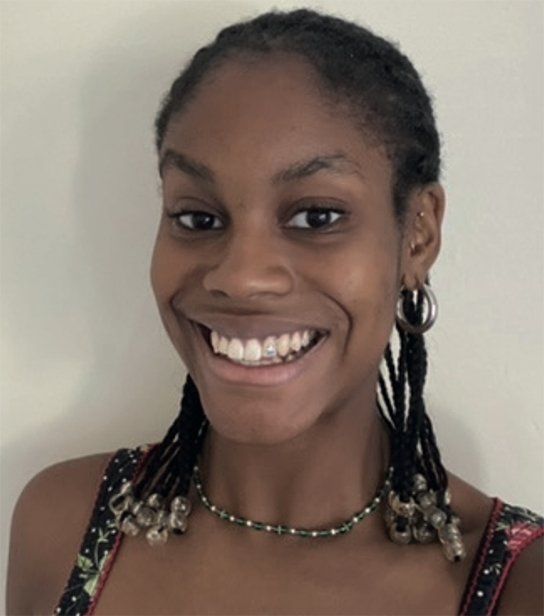
Amber Bygrave Brown

Amber shares her experience of her 2021 summer placement at the Steve Sinnott Foundation.

I have been honoured to work alongside the Steve Sinnott Foundation as part of my summer placement for my degree in International Development with Politics. This experience has taught me a range of skills, this included the organisation behind a small charity, how people view charitable work and the many things the charity is working on. However, one of the most important lessons I learnt during my experience was the impact one can have when you truly are invested and enjoy what you are doing.


Working with a small organisation such as the Steve Sinnott Foundation helped me decide what type of environment I would like to work in once I have finished my degree: it made me realise how valuable and special it is to work in a closely- knit organisation. Seeing how colleagues interacted with each other and how passionate they all were about their given cause made me feel optimistic about my future endeavours as I have seen what it is like to work with people who share your views and how that helps create impactful projects and makes you feel like you belong somewhere. 

The role of education can also make one feel like they belong somewhere or provide them with a community, hence why I believe education is so important, especially in a constantly globalising world.


It acts as one of the most powerful tools not only to help solve the issues of poverty but also to help connect people from different walks of life: the practice of teaching and learning from others is key in forming life-long connections, understanding different cultures and overall creating a larger space for acceptance.


I definitely experienced this aspect of the power of education while working with the organisation. When working on the Positive Periods Project, I was able to learn about the culture within Sierra Leone and how people there have adapted to the recent pandemic while also working with the Foundation. Bonding over a common experience such as the pandemic allowed the idea of similarity and belonging to come to the fore. However, learning about the education system in Sierra Leone and how the work of the Positive Periods program has helped girls engage more and built an even greater connection, has allowed me to empathise with how the pandemic affected us in different ways.


Part of my placement included providing insight into how young people nowadays view charitable organisations, then helping the Steve Sinnott Foundation incorporate that into their work. My findings showed that despite the pandemic, there is still a great concern for the welfare and education of others. I found this moving as it showed that although we were all experiencing a turbulent and uncertain time, issues that prevailed nationally, like internet poverty preventing children from attending online schools to international issues seen in Sierra Leone, showcased that people of all ages were connected by a greater issue.


Overall, my summer placement with the Steve Sinnott Foundation has been an experience I will never forget as it has helped me establish the fact I do want to be involved in the future of education and making it accessible to all. It has also taught me that you can feel like you belong when people around you share the same desires as you to make a change and with that passion, change is possible. 


First published in Engage 23.


If you would like to do a placement at the Steve Sinnott Foundation, get it touch and let us know.

BY AMBER BYGRAVE BROWN • April 27, 2022
By Ann Beatty February 14, 2026
On 23rd January at the Cima Community School of Hope (ECEC), the first workshop was held with the first group of students as part of the STEM program. This activity marks a promising start to the program's implementation. STEM (Science, Technology, Engineering, and Math) is crucial for children because it fosters critical thinking, problem-solving, and creativity from a young age. It nurtures natural curiosity, helps children understand the modern world, and builds resilience through hands-on experimentation. Additionally, early STEM exposure prepares them for future academic and career success. A total of 20 students participated in this first session. The session focused on a general presentation of the importance of computer programming in today's world. The students were also introduced to the Scratch software interface, an educational tool well-suited for teaching children programming. This initial experience went smoothly and generated considerable interest and strong motivation among the students.
By Steve Sinnott February 14, 2026
At the Steve Sinnott Foundation, we know that planning for the future is one of the most important things you can do for the people and causes you care about. That’s why we’re delighted to offer our staff and volunteers the opportunity to write or update their will this Spring. Whether you’ve been meaning to get started for years, or you simply need to make a few updates, this is the perfect time to take that important step. Join Our Free Will Writing Webinar To help you get started, we’ve partnered with expert estate planners Octopus Legacy , who will be hosting a free webinar(s) covering everything you need to know about writing or updating your will. Staff & Volunteers 12pm, Thursday 5th March Online via Zoom - https://us02web.zoom.us/webinar/register/WN_uvirWft7S12lJUby6oUtnQ#/registration Supporters 12pm, Tuesday 10th March Online via Zoom - https://us02web.zoom.us/webinar/register/WN_xxJNZd6ZQYKMOs-2fNz0Gg#/registration During the session, you’ll learn: Why it’s important to have an up-to-date will What to consider when writing or updating your will The different types of will-writing services available How Lasting Powers of Attorney work and why they matter How to claim your free will this Spring This webinar is designed to make what can feel like a complex process simple, clear and manageable. Why Having a Will Matters Having an up-to-date will ensures your wishes are respected and your loved ones are protected. Without one, the law decides how your estate is distributed and that may not reflect what you would have wanted. A will gives you peace of mind. It allows you to: Provide clarity and security for your family Appoint guardians for children if needed Make specific gifts to individuals or causes Ensure your estate is handled efficiently Updating your will is just as important as writing one. Life changes marriages, children, property purchases, or changes in circumstances can all affect your wishes. Claim Your Free Will This Spring As part of this initiative, eligible staff and volunteers will have the opportunity to claim a free will-writing service. Full details will be shared during the webinar, including how to access this benefit. We encourage you to take advantage of this opportunity. Writing or updating your will is one of the most responsible and caring decisions you can make for yourself and for those you care about. Register Now Spaces are available now, simply register using the link below: Staff & Volunteers - https://us02web.zoom.us/webinar/register/WN_uvirWft7S12lJUby6oUtnQ#/registration Supporters - https://us02web.zoom.us/webinar/register/WN_xxJNZd6ZQYKMOs-2fNz0Gg#/registration We hope you’ll join us on Thursday 5th March and take this positive step towards securing your future.
By Kaylem James February 3, 2026
In my time as an assistant at The Steve Sinnott Foundation (SSF), one of my research tasks was looking into how the Foundation contributed to the achievement of the Sustainable Development Goals (SDGs). I really believe in the work of the Foundation and I have also been raising funds as I believe that every child must have the right to education. SSF is a UK-based educational charity focused on promoting quality education worldwide. It plays a supportive role in achieving the United Nations 17 Sustainable Development Goals (SDGs), especially Goal 4: (Quality Education), but its work contributes to several others as well. Here's how the Foundation supports the SDGs: Goal 4 – Quality education (core focus) The Foundation's main mission is to ensure inclusive and equitable quality education and promote lifelong learning opportunities for all. It supports teachers and educational initiatives in developing countries. It runs programmes like: The Education for All Campaign – advocating for universal access to education. Teacher empowerment projects – providing training and resources to educators in under-resourced countries. Girls' education programmes – encouraging and supporting girls to stay in school and complete their education. Goal 3 – Good health and well-being Through education, particularly health-related programmes, the Foundation contributes to raising awareness about hygiene, nutrition, and mental health. The Foundation has developed a range of webinars to promote health and wellbeing and these can be found on YouTube. Goal 5 – Gender equality The Foundation promotes girls' education, directly addressing barriers that prevent girls from accessing and completing school. It advocates for the rights of women and girls, especially in patriarchal or disadvantaged societies. Goal 8 – Decent work and economic growth By improving access to education and vocational training, the Foundation helps create employment opportunities. Educated individuals have better chances of securing decent work. Goal 10 – Reduced inequalities It supports marginalised groups, including children in rural or conflict-affected areas, contributing to reducing global inequalities in education. Goal 16 – Peace, justice and strong institutions Promotes education as a force for peace and conflict resolution. Supports democratic participation and awareness through educational programmes that foster community engagement. Goal 17 – Partnerships for the goals Collaborates with NGOs, unions, schools, and governments to deliver and advocate for education projects. Builds international partnerships to achieve the SDGs through education. Summary While The Steve Sinnott Foundation's primary focus is on Goal 4, it contributes to many of the SDGs by empowering communities through education, particularly: Gender equality (Goal 5), Health (Goal 3), Economic growth (Goal 8), Reducing inequality (Goal 10), Peace (Goal 16), and Partnerships (Goal 17).  The Foundation’s programmes also contribute to the achievement of other SDGs through the power of the provision of education and life-long learning; 1. No Poverty, 2. Zero Hunger, 13. Climate Action. We believe that all of the 17 SDGs are only achievable by ensuring that all children, wherever they are born, deserve the human right of quality education. Over 250 million children are still out of school and the global out-of-school population has reduced by only 1% in nearly ten years, according to the UNESCO Global Education Monitoring Report 2024. There is still much work to do in achieving equitable and quality Education for All.