Haitians Supporting Themselves

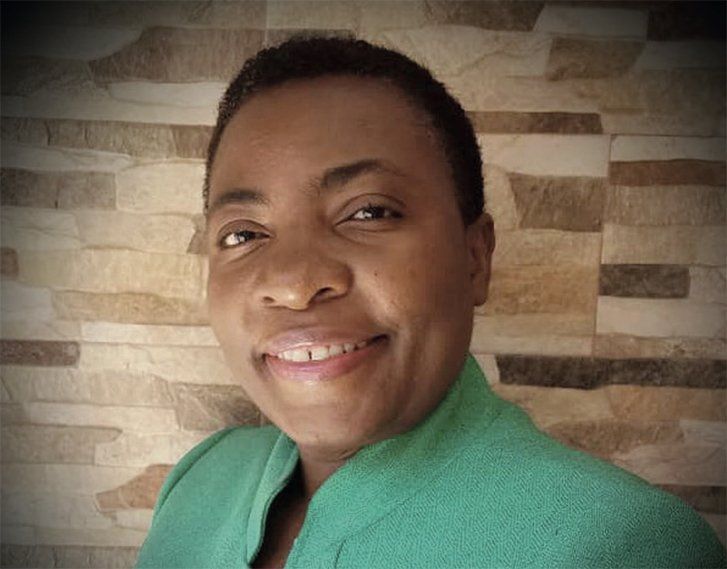
Gabrielle Aurel

Gabrielle Aurel is director and founder of Sonje Ayiti Organization (SAO) a nonprofit organisation founded in 2004 in Atlanta, Georgia with the mission of Helping Haitians Help Themselves, through education, economic development, and health promotion. SAO began working in the North and Northeast of Haiti in 2007. 

Scholars believe that access to education is a critical pathway out of poverty, with schools as strategic locations for the development of ties to the community. It is with this philosophy that SAO implements its vision of a transformed and improved Haiti. To do this, we focus on the most vulnerable. The journey began in 2010 when 12 orphans from earthquake-ravaged Port-au-Prince made their way to relatives in the remote community of Cima on the outskirts of Limonade. The families welcomed the children; however, there was no school in Cima, and they could not afford to send them (or their own children) to school in Limonade which is several kilometers away.


SAO recruited local leaders and began the daunting task of bringing hope to the children in despair. In the quest to create hope for these children, we were compelled to reengineer our education program. We realized that it was not sufficient to solely sponsor youth from rural families pursuing university and technical degrees. SAO decided to start from the bottom up and began working to create access to education by providing a quality curriculum to children in the village of Cima. The dream that began with thirty children 10 years ago has grown to 325 students in preschool through to 9th grade.


Political disturbances and the Covid pandemic caused difficulties and upheaval, but did not keep us from teaching and learning. Classroom teaching was reduced, and motorcycles were used to make trips to the students to deliver and pick up homework packets weekly until the students were able to return to the building. 

During the past year, SAO implemented several new projects including Positive Periods that taught girls how to make reusable sanitary protection and learn about sexual health, enabling them to regularly attend school. The program took place over the summer and trained over 200 girls, across 15 schools and communities who have been busy cascading this training to their peers. There was also Business Training to better prepare students to set goals, manage funds, and improve livelihoods in an uncertain future job market and limited opportunities. 


Despite the recent challenges in Haiti at the moment we have been able to progress with our Positive Periods workshops, thanks to a truly amazing team there, undaunted by the current events.


Stelandie Jean-François, started the session introducing the materials they will be using and the patterns that they will use to create their own reusable pads. Her students have no experience sewing so they will be learning this skill also. They are very excited to be getting hands on experience making period pads that will help them live a fuller life, and come to school every day.


The school nurses delivered the training modules covering sexual health educational sessions. This ensures that girls and young women know more about menstruation and female sexual health. This supports them to better manage and understand their menstrual health and wellbeing.


In the initial workshops, staff are trained how to deliver the program in their respective schools. This way the knowledge is cascaded through to the wider community.


We would like to offer our heartfelt appreciation and thanks to the team in Haiti who have been able to go ahead with the workshop, despite the current challenges.


Most schools in Haiti are privately run and tuition fees constitute a barrier for many families. SAO has managed, through sponsorships, to waive tuition fees, provide one hot meal daily, health insurance, teaching supplies, books, extracurricular activities, and on-going training to staff. We strive to create an environment conducive to learning to ensure that rural Cima School of Hope students have the same opportunities as students in urban and/or metropolitan areas.


Education in Haiti should be standardized so that students from all walks of life can benefit from the educational system. Cima School of Hope’s enrollment rates have significantly increased over the years, and many parents feel a sense of pride and security, knowing that education is key to success. They value that their children will not be left behind because they were born in a rural area where education is a luxury. Cima School of Hope is a ray of hope for the future generations of its community. 


First published in Engage 23.

BY GABRIELLE AUREL • May 4, 2022
By Ann Beatty February 14, 2026
On 23rd January at the Cima Community School of Hope (ECEC), the first workshop was held with the first group of students as part of the STEM program. This activity marks a promising start to the program's implementation. STEM (Science, Technology, Engineering, and Math) is crucial for children because it fosters critical thinking, problem-solving, and creativity from a young age. It nurtures natural curiosity, helps children understand the modern world, and builds resilience through hands-on experimentation. Additionally, early STEM exposure prepares them for future academic and career success. A total of 20 students participated in this first session. The session focused on a general presentation of the importance of computer programming in today's world. The students were also introduced to the Scratch software interface, an educational tool well-suited for teaching children programming. This initial experience went smoothly and generated considerable interest and strong motivation among the students.
By Steve Sinnott February 14, 2026
At the Steve Sinnott Foundation, we know that planning for the future is one of the most important things you can do for the people and causes you care about. That’s why we’re delighted to offer our staff and volunteers the opportunity to write or update their will this Spring. Whether you’ve been meaning to get started for years, or you simply need to make a few updates, this is the perfect time to take that important step. Join Our Free Will Writing Webinar To help you get started, we’ve partnered with expert estate planners Octopus Legacy , who will be hosting a free webinar(s) covering everything you need to know about writing or updating your will. Staff & Volunteers 12pm, Thursday 5th March Online via Zoom - https://us02web.zoom.us/webinar/register/WN_uvirWft7S12lJUby6oUtnQ#/registration Supporters 12pm, Tuesday 10th March Online via Zoom - https://us02web.zoom.us/webinar/register/WN_xxJNZd6ZQYKMOs-2fNz0Gg#/registration During the session, you’ll learn: Why it’s important to have an up-to-date will What to consider when writing or updating your will The different types of will-writing services available How Lasting Powers of Attorney work and why they matter How to claim your free will this Spring This webinar is designed to make what can feel like a complex process simple, clear and manageable. Why Having a Will Matters Having an up-to-date will ensures your wishes are respected and your loved ones are protected. Without one, the law decides how your estate is distributed and that may not reflect what you would have wanted. A will gives you peace of mind. It allows you to: Provide clarity and security for your family Appoint guardians for children if needed Make specific gifts to individuals or causes Ensure your estate is handled efficiently Updating your will is just as important as writing one. Life changes marriages, children, property purchases, or changes in circumstances can all affect your wishes. Claim Your Free Will This Spring As part of this initiative, eligible staff and volunteers will have the opportunity to claim a free will-writing service. Full details will be shared during the webinar, including how to access this benefit. We encourage you to take advantage of this opportunity. Writing or updating your will is one of the most responsible and caring decisions you can make for yourself and for those you care about. Register Now Spaces are available now, simply register using the link below: Staff & Volunteers - https://us02web.zoom.us/webinar/register/WN_uvirWft7S12lJUby6oUtnQ#/registration Supporters - https://us02web.zoom.us/webinar/register/WN_xxJNZd6ZQYKMOs-2fNz0Gg#/registration We hope you’ll join us on Thursday 5th March and take this positive step towards securing your future.
By Kaylem James February 3, 2026
In my time as an assistant at The Steve Sinnott Foundation (SSF), one of my research tasks was looking into how the Foundation contributed to the achievement of the Sustainable Development Goals (SDGs). I really believe in the work of the Foundation and I have also been raising funds as I believe that every child must have the right to education. SSF is a UK-based educational charity focused on promoting quality education worldwide. It plays a supportive role in achieving the United Nations 17 Sustainable Development Goals (SDGs), especially Goal 4: (Quality Education), but its work contributes to several others as well. Here's how the Foundation supports the SDGs: Goal 4 – Quality education (core focus) The Foundation's main mission is to ensure inclusive and equitable quality education and promote lifelong learning opportunities for all. It supports teachers and educational initiatives in developing countries. It runs programmes like: The Education for All Campaign – advocating for universal access to education. Teacher empowerment projects – providing training and resources to educators in under-resourced countries. Girls' education programmes – encouraging and supporting girls to stay in school and complete their education. Goal 3 – Good health and well-being Through education, particularly health-related programmes, the Foundation contributes to raising awareness about hygiene, nutrition, and mental health. The Foundation has developed a range of webinars to promote health and wellbeing and these can be found on YouTube. Goal 5 – Gender equality The Foundation promotes girls' education, directly addressing barriers that prevent girls from accessing and completing school. It advocates for the rights of women and girls, especially in patriarchal or disadvantaged societies. Goal 8 – Decent work and economic growth By improving access to education and vocational training, the Foundation helps create employment opportunities. Educated individuals have better chances of securing decent work. Goal 10 – Reduced inequalities It supports marginalised groups, including children in rural or conflict-affected areas, contributing to reducing global inequalities in education. Goal 16 – Peace, justice and strong institutions Promotes education as a force for peace and conflict resolution. Supports democratic participation and awareness through educational programmes that foster community engagement. Goal 17 – Partnerships for the goals Collaborates with NGOs, unions, schools, and governments to deliver and advocate for education projects. Builds international partnerships to achieve the SDGs through education. Summary While The Steve Sinnott Foundation's primary focus is on Goal 4, it contributes to many of the SDGs by empowering communities through education, particularly: Gender equality (Goal 5), Health (Goal 3), Economic growth (Goal 8), Reducing inequality (Goal 10), Peace (Goal 16), and Partnerships (Goal 17).  The Foundation’s programmes also contribute to the achievement of other SDGs through the power of the provision of education and life-long learning; 1. No Poverty, 2. Zero Hunger, 13. Climate Action. We believe that all of the 17 SDGs are only achievable by ensuring that all children, wherever they are born, deserve the human right of quality education. Over 250 million children are still out of school and the global out-of-school population has reduced by only 1% in nearly ten years, according to the UNESCO Global Education Monitoring Report 2024. There is still much work to do in achieving equitable and quality Education for All.