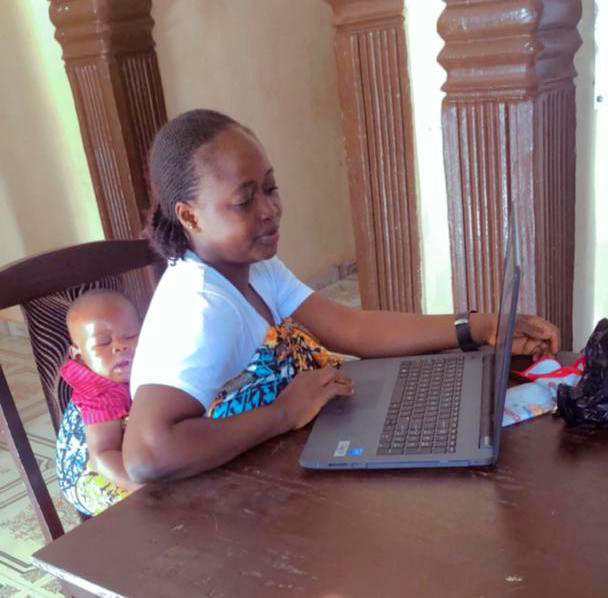
Isata M Kamara is the founder of GEDSA.
Gender Equality and Development for Social Action (GEDSA)
Background
Gender Equality and Development for Social Action (GEDSA) was born from the experience and passion of the lead founder during her childhood and teenage years. Gender discrimination and cultural practices have forced many girls out of school and made their dreams of a better life collapse along the way. The organisation is registered with the Bombali District Council and the Ministry of Social Welfare in Sierra Leone.
In Africa, Sierra Leone in particular is a society that still sees the position of women to be just housewives and cooks for their husbands. Sierra Leone is rated among one of the poorest countries in the world, the country has a population of over seven million according to the 2021 National Census (Male 3,716,263, Female 3,825,378, Total 7,541,641¹) and the priority according to culture is to prioritise boys’ education over girls. This is reflective of the education rates in the country as only 47% of the population was educated between the period 2004-2022. (2)
Impact of The Steve Sinnott Foundation in supporting education
Since the establishment of the partnership between The Steve Sinnott Foundation, the Sierra Leone Teachers Union, and Gender Equality and Development for Social Action, many interventions have been taken in the Bombali District in Northern Sierra Leone, Porto Loko District in the North-Western Region and Bo District in the Southern Region of Sierra Leone. These range from the training of school leaders on gender based violence, supporting school girls in the making of reusable sanitary pads, engaging teenagers on election violence, continuous engagement with schools to ensure girls have the space to speak up and report any form of violence (physical, sexual or psychological) through established structures like school mentors and guardian counsellors.
Funding support from The Steve Sinnott Foundation UK has seen girls making their own reusable sanitary pads, which has helped many girls come to school during their menstrual periods as they could not always afford to buy them, and become confident in speaking up.
GEDSA continues to make inroads in engaging stakeholders through radio discussions and community meetings in making sure children, especially girls and children with disabilities, are provided with support and care. The provision of learning materials including bags, books, pens, pencils, mathematical sets, sharpeners were provided for 100 children. The first phase targeted 50 beneficiaries and offered training for school leaders and parents to provide them with the skills and techniques to support them.
Governments are charged with the responsibility to ensure all economic, social and political aspects of a country are fully provided, but the status of Sierra Leone makes this impossible. So the need for partnerships and support from like minded organisations is essential for the achievement of SDG4.
The Steve Sinnott Foundation is fundamental in supporting GEDSA towards the achievement of this goal. Over this period of supporting GEDSA, over 2000 girls and boys in 15 schools have been taught about hygiene, drugs and violence, the importance of education and much more. 60 school leaders and over 100 parents have been reached with educational messages through support from the Steve Sinnott Foundation over a four year period. The aim is to continuously engage schools as an ongoing process each school year.
References:
- https://www.statistics.sl/images/StatisticsSL/Documents/Census/MTPHC_Provisional_Results/2021_MTPHC_Provisional_Results.pdf
- https://www.macrotrends.net/countries/SLE/sierra-leone/literacy-rate
This article first appeared in Engage 27.
BY ISATA M KAMARA • March 18, 2024
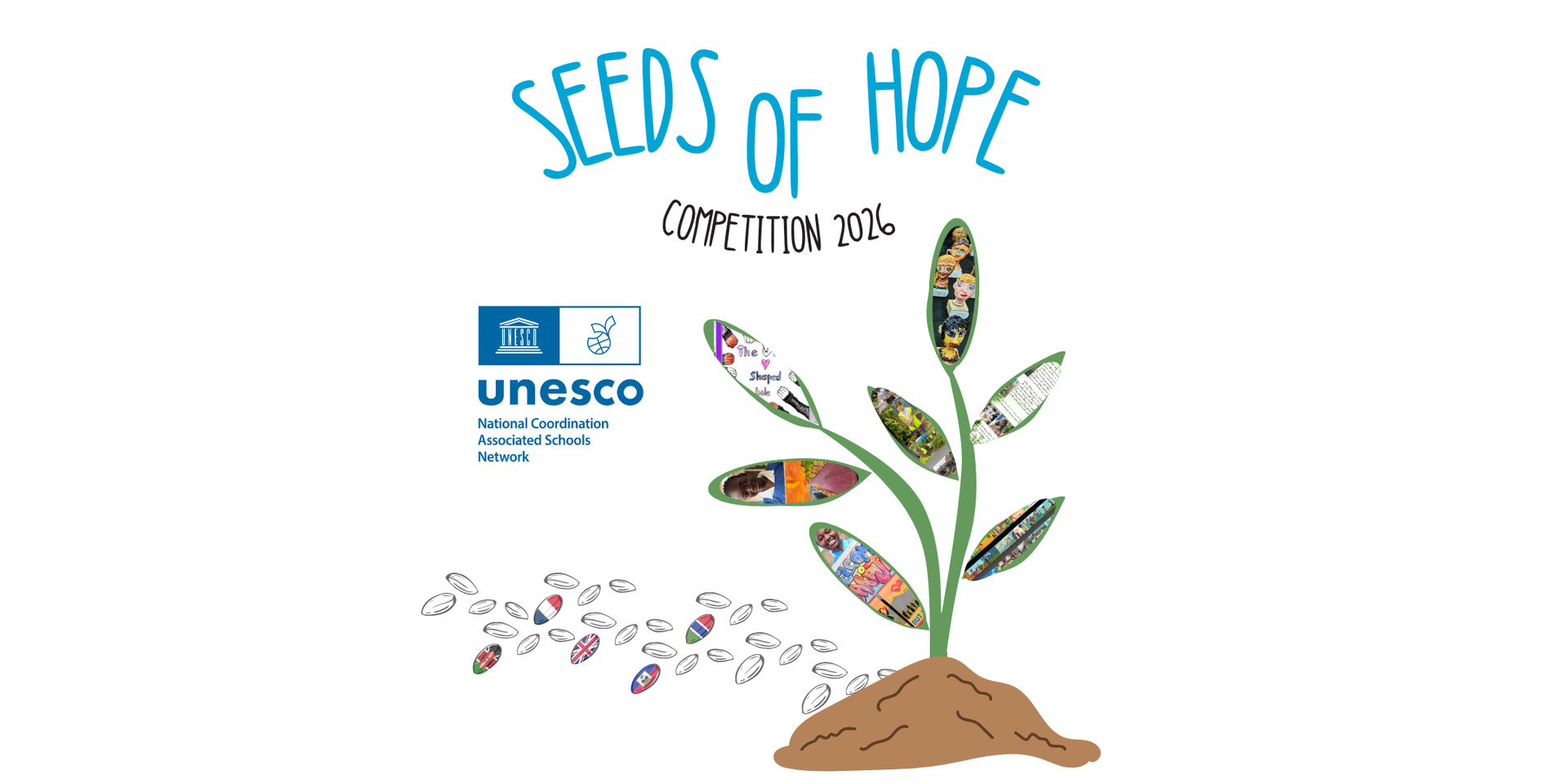
The 2026 UNESCO UK ASPnet Seeds of Hope Competition Online Awards Ceremony took place on 30 September 2026 and was attended by over 70 participants, including young people, teachers, the Competition Judges and UNESCO Commission representatives. The ethos of the Competition was ‘ to recognise, value and celebrate the efforts of all young people who entered the Competition, and their contribution towards helping UNESCO realise many of its key objectives, especially with regard to sustainability and climate challenges’. 2026 is the second year that UNESCO UK has undertaken the Seeds of Hope for a Better Future Competition. The Competition featured 50 projects, involving 13 countries across six continents, and representing 67 educational institutions from all sectors (early years, primary, secondary and tertiary). Significantly, this was more than double the participation in the 2025 Competition, with thousands of young people taking part in, or being impacted . Eight winners from Brazil, Ghana, Kenya, Nigeria and Slovenia received Gold Certificates and shared the £5000 prize pot. Seven Kenyan Teacher Training College projects were also collectively recognised for projects that strongly support the sustainability and climate change objectives of UNESCO through ongoing work of local, regional, national and international importance, and received the 2026 UNESCO UK ASPnet Seeds of Hope Legacy Award .
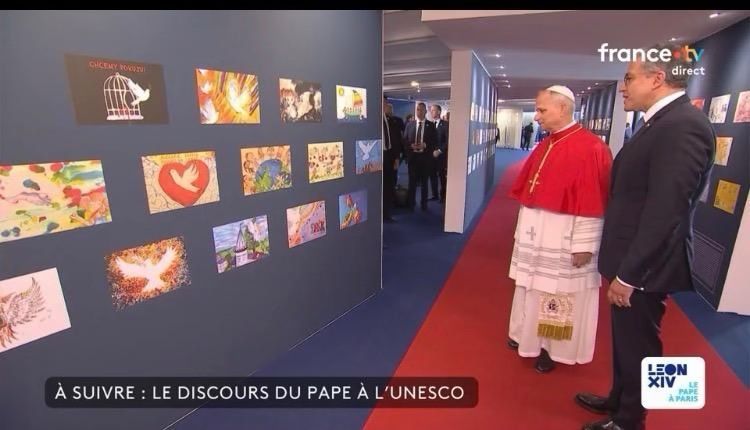
A moment to be proud of and a reminder of why young people’s voices matter. Today, artwork created by students from UNESCO ASPnet UK schools on the theme of peace was presented to Pope Leo XIV at UNESCO Headquarters in Paris, alongside artwork from young people in other countries. What an amazing opportunity for our students to have their creativity, ideas and hopes represented on an international stage. For me, this is what UNESCO ASPnet is about: creating opportunities for young people to connect across cultures, express themselves creatively, learn from one another and imagine a better future together. The power of young people’s creativity: their voices being part of an international conversation about education, peace, culture and our shared future. UNESCO’s programme for Pope Leo XIV’s visit specifically focused on education, artistic creation, AI, information integrity and peace. The work was part of a mural that brings together 80 original creations marking UNESCO’s 80th anniversary, produced as part of the "International Youth for Peace" competition organized by France TV and UNESCO.
Most of us want to leave the world a little better than we found it. Whether that's through the people we love, the values we pass on, or the causes we care about, we all hope our legacy will make a difference. One of the simplest ways to do that is by writing a will. This autumn, we are proud to be taking part in the Change Starts with a Will campaign, allowing our supporters to write or update their will free of charge through our trusted partner, Octopus Legacy. Why writing a will matters Writing a will isn't just about deciding who inherits your possessions. It's about making sure your wishes are respected and providing peace of mind for the people you care about. Having a will means you can: Protect the people you love. Make important decisions about your estate. Reduce uncertainty for your family. Leave a lasting gift to a cause that reflects your values. Many people put off writing a will, believing it's something to think about later in life. In reality, it's one of the most important documents you'll ever create. A legacy that supports education Steve Sinnott dedicated his life to championing education as a fundamental human right. His belief was simple but powerful: every child deserves the opportunity to learn, and every teacher deserves the support they need to inspire future generations. Today, we continue that mission by working with partners across the world to improve access to quality education, strengthen teaching and support communities where education can change lives. When you choose to leave a gift in your will to The Steve Sinnott Foundation, you're helping ensure that this work can continue for years to come. After taking care of family and friends, even a small gift could help provide learning opportunities, strengthen education systems and create brighter futures for generations to come. A gift that lasts beyond a lifetime Legacy gifts play an important role in helping charities plan for the future. Your support could help us continue investing in sustainable education projects, supporting teachers and ensuring more children have access to the education they deserve. It's a powerful way to ensure your values live on long into the future. Write your will for free As part of our Autumn 2026 campaign, we're offering supporters the opportunity to write or update their will free of charge through Octopus Legacy. There is no obligation to leave a gift to The Steve Sinnott Foundation, but we hope you'll consider remembering us after you've taken care of those closest to you. Together, we can continue Steve Sinnott's vision of a world where education changes lives. Find out more If you've been thinking about writing your will, there's never been a better time. Our free will service is available until 31 October 2026 , making it easy to protect the people you love while considering the lasting impact your legacy could have on education worldwide. https://octopuslegacy.com/online-will?channel=partner Change starts with a will. And together, we can help create a future where education is accessible to everyone.