Expanding Opportunity and Empowering Communities: A Year of Impact
Across the globe, meaningful change often begins with access that is access to education, to safe spaces, to knowledge, and to opportunity. Last year, a series of programmes collectively reached hundreds of thousands of individuals, creating positive effects that extend far beyond the numbers themselves.
At the heart of this impact is a commitment to safety and dignity. The Prevention of Gender-Based Violence Programme has supported 2,161 educators across Cape Verde, The Gambia, Ghana, Haiti, Nepal, Sierra Leone, and South Africa. By equipping educators with the tools to recognise, prevent, and respond to gender-based violence, the programme is helping to foster safer learning environments for countless students. Teachers are not just educators, they are often the first line of support, and empowering them strengthens entire communities.
Equally transformative is the Positive Periods Programme, which has reached 70,000 women and girls in Ghana, Haiti, and Nepal. Access to menstrual health education and resources is more than a health issue; it is a matter of equity. By breaking stigma and ensuring girls can attend school with confidence, this initiative is helping unlock potential that might otherwise remain out of reach.
Over 500,000 students and educators have benefited from access to digital classrooms and Learning Resource Centres in The Gambia, Haiti, and Nepal. In regions where resources are often limited, digital access opens doors to knowledge, connection, and opportunity, helping to bridge longstanding educational gaps.
Literacy, too, continues to be a powerful tool for empowerment. In Haiti, the Kreyol Literacy Programme has supported 200 learners, enabling individuals to build foundational skills that impact every aspect of life, from employment opportunities to civic participation.
Young people are also stepping into leadership roles. The Youth Ambassador Programme in The Gambia has supported 78 young individuals, nurturing a new generation of advocates and changemakers. These ambassadors are not only gaining skills but also shaping the future of their communities through their voices and actions.
Supporting educators remains a consistent priority. In Sierra Leone, 152 educators participated in Special Educational Needs (SEN) Awareness Workshops, strengthening inclusive teaching practices. Meanwhile, in The Gambia, 80 educators received training in counselling skills, enhancing their ability to support students’ emotional and mental wellbeing an often overlooked but a critical component of education.
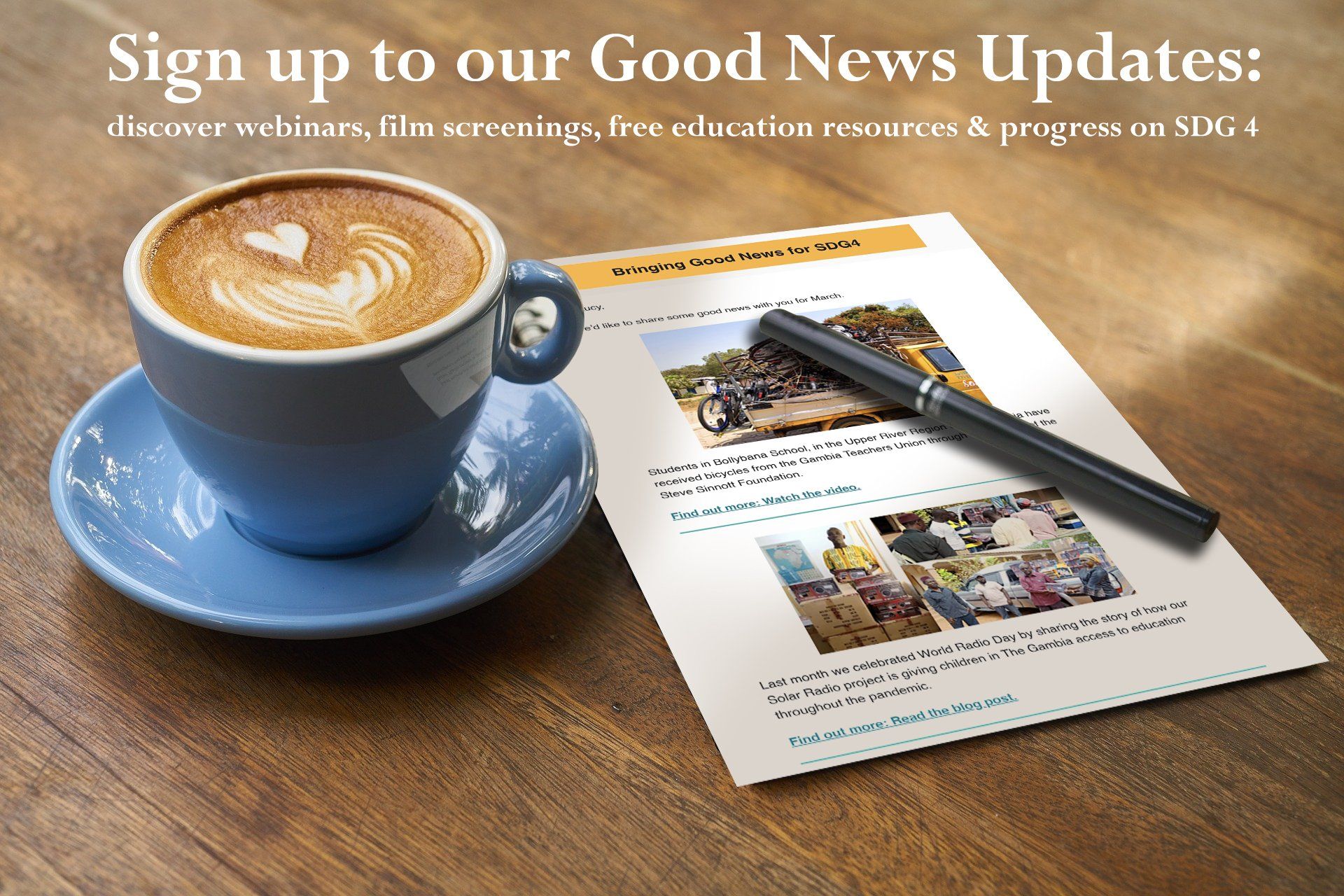
Sometimes, impact comes in simple but life-changing forms. The delivery of 40 bicycles to students in rural villages has made it safer and easier for young people to travel to school. For many, this is not just about convenience, it is the difference between attending school regularly and missing out on education altogether.
Taken together, these initiatives highlight a holistic approach to development, one that recognises the interconnected nature of education, health, safety, and empowerment.
The model of working that we have developed over time at the Foundation, a reciprocal learning model that values real partnership working at its core has played a huge part in our development. It has enabled us to develop relationships built on trust and dignity that are achieving the goal of Education for All.
Behind every statistic is a story: a teacher better equipped to support their students, a girl able to attend school without barriers, a young leader finding their voice.
Progress is not defined by a single programme or outcome, but by the collective momentum of many efforts working toward a shared goal. And as these numbers show, that momentum is growing, bringing lasting change to communities around the world.
Thank you to everyone who has supported our work in 2025 and we look forward to making more progress together in 2026.