Unleashing Potential

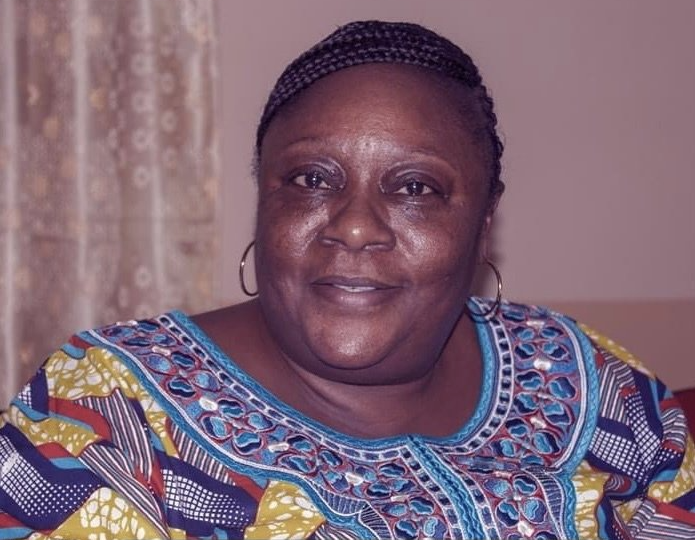
MARIE ANTOINETTE CORR, GENERAL SECRETARY GAMBIA TEACHERS’ UNION
How can we rapidly accelerate progress in education not only to help marginalized communities catch up to where the privileged are today, but also to reach a more holistic and equitable education for every child?


Building an inclusive system requires substantial changes in mind-sets, policies and practices. The challenge will be to create new systems that facilitate opportunities for all students.


The analysis of the best performing education systems shows that their curricular proposals are able to motivate, challenge and encourage life and citizen skills development. This requires a more personalised education that provides a range of opportunities. In order to promote the necessary skills to live in the 21st century we must pay more attention to student welfare, to social and emotional learning in addition to cognitive development.


We are living at a time of enormous uncertainty. Technology is advancing at an ever–increasing rate, widening inequality threatens to further disrupt our systems and leave a large part of the world behind as a result. Change is happening at a disorienting pace and our institutions can barely keep up.


Today technological advancement considerably influences our day-to-day life. As a result it becomes essential that the education system should also get restructured to keep pace with changing times. It is also essential that the renewed significance given to education and learning raises the enthusiasm of teachers, families, and communities, and encourages students to engage in their learning.


While we work to transform, we also need to focus on accessibility.According to UNICEF, more than 72 million children of primary education age are not in school. The World Bank’s ‘Learning poverty’ indicator, ie the percentage of children who have not reached minimum reading proficiency by the age of 10, stood at 53% in low and middle-income countries before the outbreak started.


The Covid 19 pandemic caused 1.6 billion children and young people to be out of school in 161 countries. This is close to 80% of the world’s enrolled students. 


The mission of all education systems is the same. It is to overcome the learning crisis we are already witnessing and to respond to the pandemic we are all facing. The challenge today is to reduce, as much as possible, the negative impact this pandemic has had on learning and schooling and build on this experience to get back on a path to foster improvement in learning.


As education systems cope with this crisis, they must also be thinking of how they can recover stronger, with a renewed sense of responsibility from all stakeholders. With responsibility fostering a better understanding of the urgent need to close the gap in opportunities, thus assuring that all children have the same chances for quality education.


We should admit that both private and public schools face a common challenge: to strengthen their capacity to impart core values in order to attain one of the pillars of education in the twenty first century - learning to live together.


Investing in education is the most cost-effective way to drive economic development and improve opportunities for young women and men. As it unlocks progress on all 17 Sustainable Development Goals according to United Nations Secretary-General Antonio Gutierrez.


Let’s blend the lessons of the past with the technology of the present and future to truly transform education, giving students the ability to think, learn and evolve no matter what challenges await them tomorrow. Let’s allow our young people to unleash their potential for the benefit the world.


This article was first published in Engage 25.


MARIE ANTOINETTE CORR • March 13, 2023
By Ann Beatty February 14, 2026
On 23rd January at the Cima Community School of Hope (ECEC), the first workshop was held with the first group of students as part of the STEM program. This activity marks a promising start to the program's implementation. STEM (Science, Technology, Engineering, and Math) is crucial for children because it fosters critical thinking, problem-solving, and creativity from a young age. It nurtures natural curiosity, helps children understand the modern world, and builds resilience through hands-on experimentation. Additionally, early STEM exposure prepares them for future academic and career success. A total of 20 students participated in this first session. The session focused on a general presentation of the importance of computer programming in today's world. The students were also introduced to the Scratch software interface, an educational tool well-suited for teaching children programming. This initial experience went smoothly and generated considerable interest and strong motivation among the students.
By Steve Sinnott February 14, 2026
At the Steve Sinnott Foundation, we know that planning for the future is one of the most important things you can do for the people and causes you care about. That’s why we’re delighted to offer our staff and volunteers the opportunity to write or update their will this Spring. Whether you’ve been meaning to get started for years, or you simply need to make a few updates, this is the perfect time to take that important step. Join Our Free Will Writing Webinar To help you get started, we’ve partnered with expert estate planners Octopus Legacy , who will be hosting a free webinar(s) covering everything you need to know about writing or updating your will. Staff & Volunteers 12pm, Thursday 5th March Online via Zoom - https://us02web.zoom.us/webinar/register/WN_uvirWft7S12lJUby6oUtnQ#/registration Supporters 12pm, Tuesday 10th March Online via Zoom - https://us02web.zoom.us/webinar/register/WN_xxJNZd6ZQYKMOs-2fNz0Gg#/registration During the session, you’ll learn: Why it’s important to have an up-to-date will What to consider when writing or updating your will The different types of will-writing services available How Lasting Powers of Attorney work and why they matter How to claim your free will this Spring This webinar is designed to make what can feel like a complex process simple, clear and manageable. Why Having a Will Matters Having an up-to-date will ensures your wishes are respected and your loved ones are protected. Without one, the law decides how your estate is distributed and that may not reflect what you would have wanted. A will gives you peace of mind. It allows you to: Provide clarity and security for your family Appoint guardians for children if needed Make specific gifts to individuals or causes Ensure your estate is handled efficiently Updating your will is just as important as writing one. Life changes marriages, children, property purchases, or changes in circumstances can all affect your wishes. Claim Your Free Will This Spring As part of this initiative, eligible staff and volunteers will have the opportunity to claim a free will-writing service. Full details will be shared during the webinar, including how to access this benefit. We encourage you to take advantage of this opportunity. Writing or updating your will is one of the most responsible and caring decisions you can make for yourself and for those you care about. Register Now Spaces are available now, simply register using the link below: Staff & Volunteers - https://us02web.zoom.us/webinar/register/WN_uvirWft7S12lJUby6oUtnQ#/registration Supporters - https://us02web.zoom.us/webinar/register/WN_xxJNZd6ZQYKMOs-2fNz0Gg#/registration We hope you’ll join us on Thursday 5th March and take this positive step towards securing your future.
By Kaylem James February 3, 2026
In my time as an assistant at The Steve Sinnott Foundation (SSF), one of my research tasks was looking into how the Foundation contributed to the achievement of the Sustainable Development Goals (SDGs). I really believe in the work of the Foundation and I have also been raising funds as I believe that every child must have the right to education. SSF is a UK-based educational charity focused on promoting quality education worldwide. It plays a supportive role in achieving the United Nations 17 Sustainable Development Goals (SDGs), especially Goal 4: (Quality Education), but its work contributes to several others as well. Here's how the Foundation supports the SDGs: Goal 4 – Quality education (core focus) The Foundation's main mission is to ensure inclusive and equitable quality education and promote lifelong learning opportunities for all. It supports teachers and educational initiatives in developing countries. It runs programmes like: The Education for All Campaign – advocating for universal access to education. Teacher empowerment projects – providing training and resources to educators in under-resourced countries. Girls' education programmes – encouraging and supporting girls to stay in school and complete their education. Goal 3 – Good health and well-being Through education, particularly health-related programmes, the Foundation contributes to raising awareness about hygiene, nutrition, and mental health. The Foundation has developed a range of webinars to promote health and wellbeing and these can be found on YouTube. Goal 5 – Gender equality The Foundation promotes girls' education, directly addressing barriers that prevent girls from accessing and completing school. It advocates for the rights of women and girls, especially in patriarchal or disadvantaged societies. Goal 8 – Decent work and economic growth By improving access to education and vocational training, the Foundation helps create employment opportunities. Educated individuals have better chances of securing decent work. Goal 10 – Reduced inequalities It supports marginalised groups, including children in rural or conflict-affected areas, contributing to reducing global inequalities in education. Goal 16 – Peace, justice and strong institutions Promotes education as a force for peace and conflict resolution. Supports democratic participation and awareness through educational programmes that foster community engagement. Goal 17 – Partnerships for the goals Collaborates with NGOs, unions, schools, and governments to deliver and advocate for education projects. Builds international partnerships to achieve the SDGs through education. Summary While The Steve Sinnott Foundation's primary focus is on Goal 4, it contributes to many of the SDGs by empowering communities through education, particularly: Gender equality (Goal 5), Health (Goal 3), Economic growth (Goal 8), Reducing inequality (Goal 10), Peace (Goal 16), and Partnerships (Goal 17).  The Foundation’s programmes also contribute to the achievement of other SDGs through the power of the provision of education and life-long learning; 1. No Poverty, 2. Zero Hunger, 13. Climate Action. We believe that all of the 17 SDGs are only achievable by ensuring that all children, wherever they are born, deserve the human right of quality education. Over 250 million children are still out of school and the global out-of-school population has reduced by only 1% in nearly ten years, according to the UNESCO Global Education Monitoring Report 2024. There is still much work to do in achieving equitable and quality Education for All.