Alfabetizasyon se chemen development - Literacy is the way to development

Alfa Limonade, Haiti


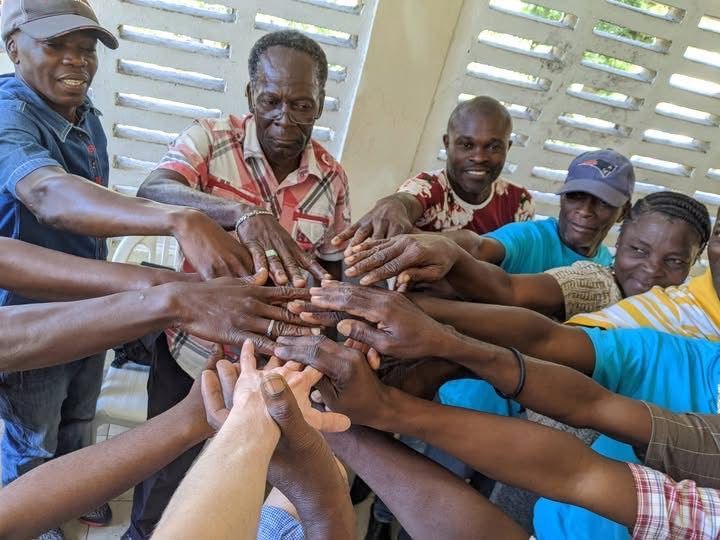
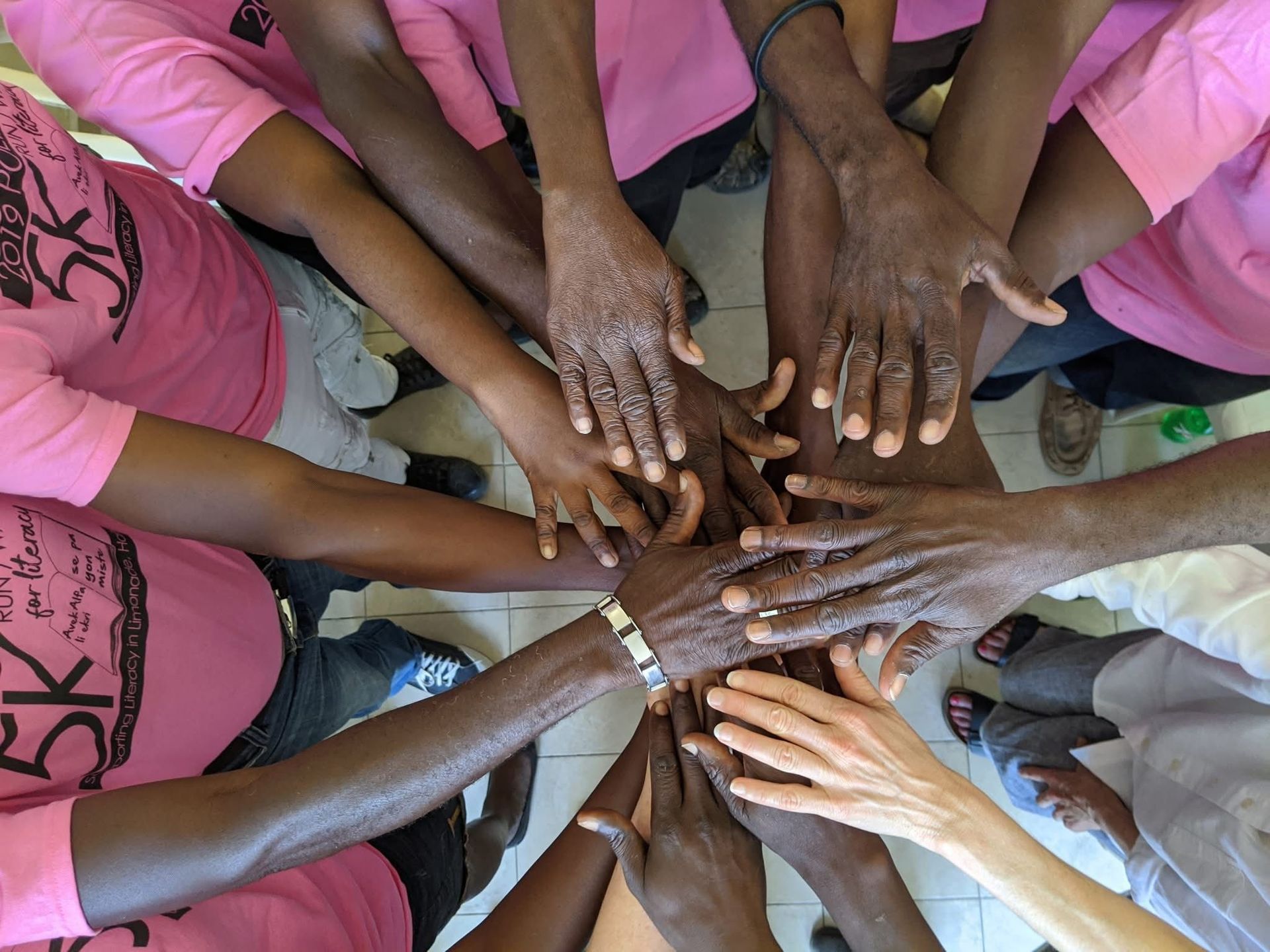
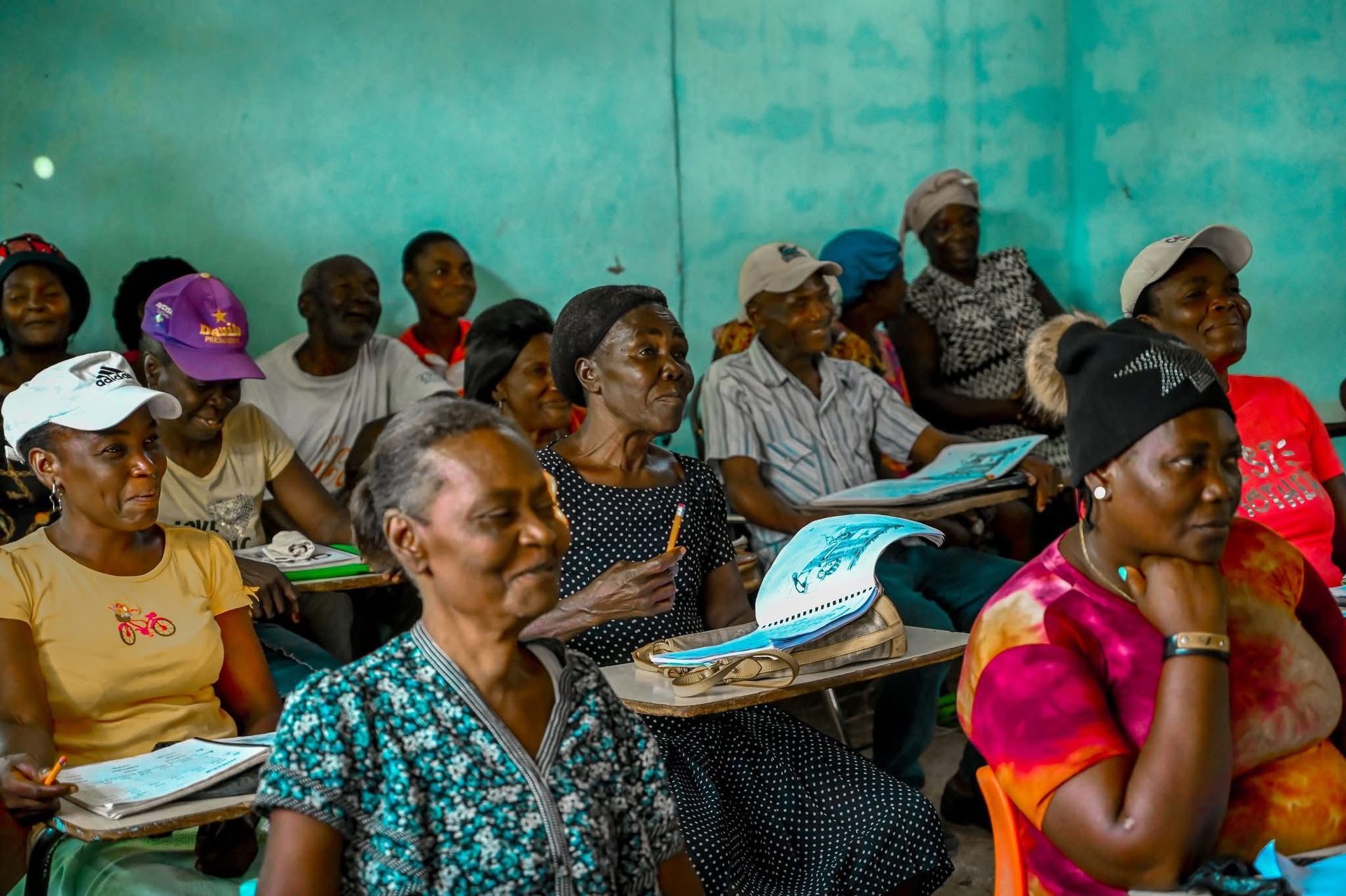
For all our people who were deprived of childhood education, the objective of this Alfa programme is to provide the opportunity to become literate. In Haiti, especially in rural areas such as ours, literacy rates are dismal. 44% of Haitian men and 56% of Haitian women are illiterate, but these statistics are far worse in villages and the countryside. (UNESCO)


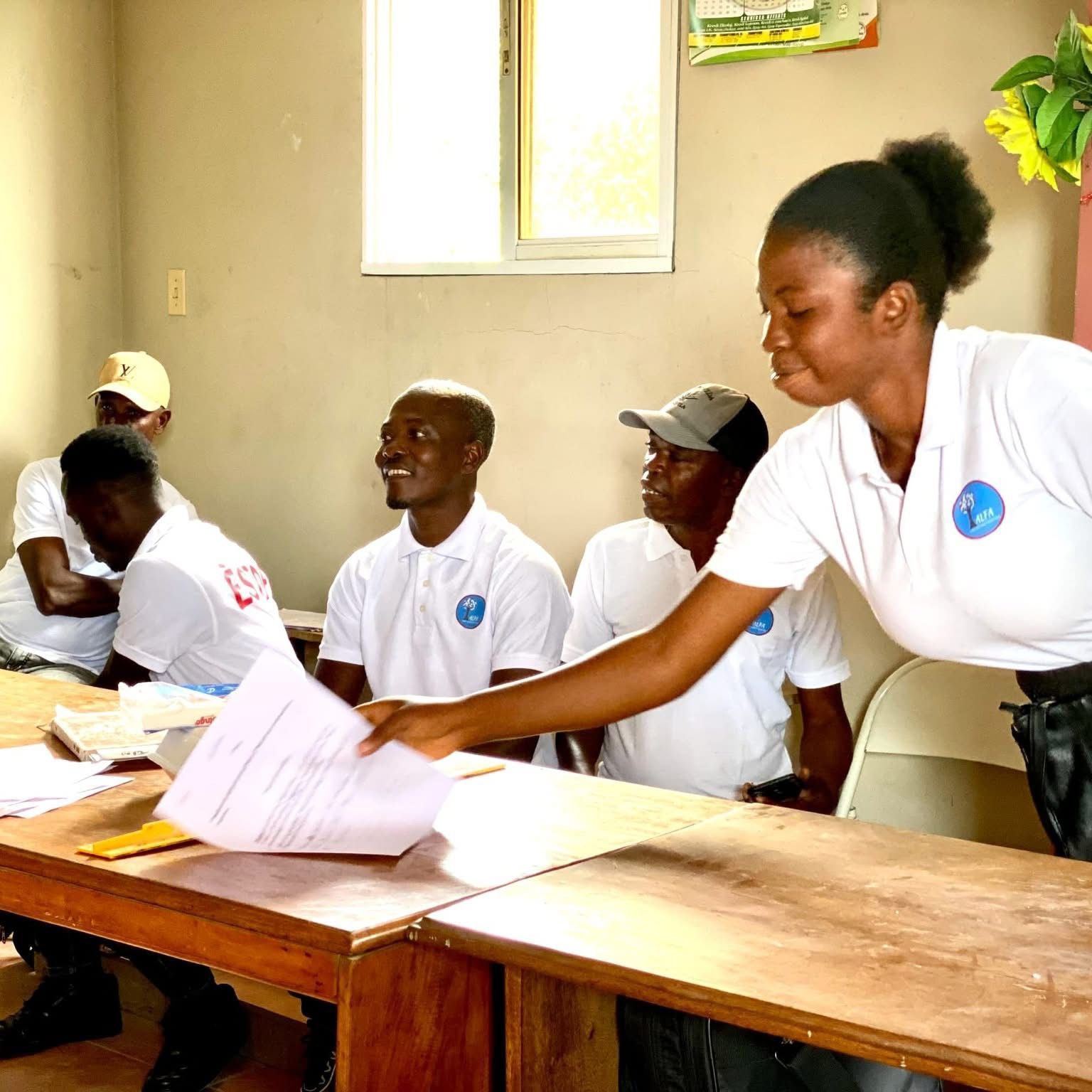
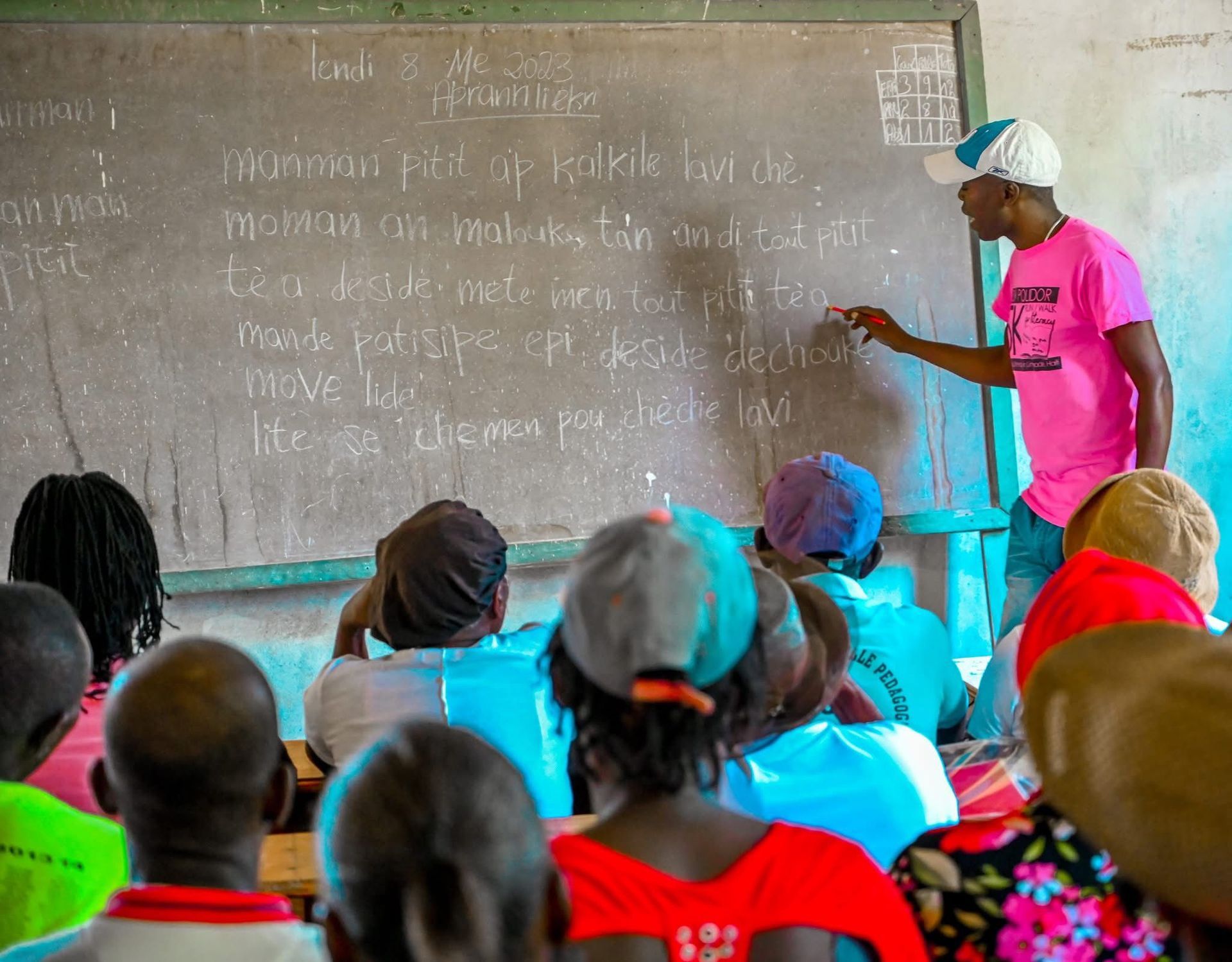
Launched 23 years ago, Alfa uses an excellent participatory text book, Goute Sel, for writing, reading, and comprehension. It was developed specifically for use here in Haiti. We also use Ti Koze Sou Istwa Peyi Ayiti, stories and questions from Haitian history, and Lekti Net Ale, reflections on connecting with the world. Through blackboard instruction and Kaye Kalkil, Alfa participants practise exercises in arithmetic. At the second level we launch group discussion through reading Edikasyon Civik.


After long consideration, our team of monitors has established that Alfa must develop its own practical introduction to numeracy for adult learners. Our improved numeracy project must adjust to the situation of Alfa participants. Obviously, in their daily lives our participants constantly face numeracy problems. Having no education, they were unaware of their lack of capacity. Today, through Alfa, they are gaining in literacy, and we should also ensure that, despite their often advanced ages, they also become numerate. They must not lose this gift simply because they have been deprived of the basic human right to education.


Through our new tool, Alfa’s market women and peasant farmers will grasp the basics of numeracy, so that they are not lost in the economic situations of their adult lives. They will address these problems with awareness, papers and pencils in their hands - just as others do!


Chancy Jacques, Alfa Supervisor, and Antolius Pierre, Alfa monitor in Jede, are collaborating on Alfa’s own book, Kalkil San Limit, with the following objectives:

  • To support our monitors with a good tool for introducing numeracy.
  • To reinforce the capacity of every Alfa participant.
  • To enable participants to reflect productively.
  • To enable participants to calculate well and fast.
  • To enable participants to record their written results.


Thus Kalkil San Limit will include the following sections: numeracy, problem solving, geometry, and mental calculation.

Numeracy is a key part of the core skill base of a literate individual. In our Haiti, this means the ability to understand and use basic maths in real life situations at home, in the market place, or for agricultural transactions. We are preparing to go to print this summer!


By Sarah Grey

Alfa Limonade, Haiti

  • Slide title

    Write your caption here
    Button
  • Slide title

    Write your caption here
    Button
  • Slide title

    Write your caption here
    Button
  • Slide title

    Write your caption here
    Button
  • Slide title

    Write your caption here
    Button
Sarah Grey • January 28, 2026
By Ann Beatty June 1, 2026
On Friday evening ( 29 May, 7.00 pm The Actors Church Covent Garden) we had the pleasure of listening to this very special concert, bringing together the Choir of King's College London and the Princeton High School Orchestra in a celebration of international friendship, collaboration, and shared values. This project reflects a commitment to peace, sustainability, equality, and cultural exchange, uniting young musicians from the United Kingdom and the United States through the universal language of music.
By Ann Beatty May 20, 2026
How a simple act of practical solidarity is transforming the journey to school in The Gambia’s Central River Region North Policies have been written. Schools have been built. Yet for many children in The Gambia’s Central River Region North, access to education is still measured in kilometres, not opportunity. 
By Laura Griffin May 13, 2026
‘In a single hour vast tracts of shaded woodland became a jumble of torn trees and upturned soil, exposed to the glare of the summer sun. Such land-clearing events are rare, but forests exhibit remarkable resilience in the face of disaster. I’m told that the Chinese character for ‘catastrophe’ is the same as that which represents the word ‘opportunity’. And, the blowdown, while catastrophic, presented opportunities for many species.’ (Wall Kimmerer, 2003: 89). In the context of a volatile, uncertain, complex, and ambiguous world (Stein, 2021) what kinds of education for hope might support children’s and young people’s critical engagement in local and global issues? In the spirit of exploring the possibilities of hope further, this short article focuses on the area of global citizenship and sustainabilityrelated education. It will briefly open by sharing commonalities across pedagogical approaches that take up the concept and act of hope more critically, and close by offering reflective questions for educators, with suggestions for further reading. Perhaps it is a kind of hope that is grounded in the present, in future reimagining(s), in ethical solidarity, and an acknowledgement of our deep entanglement with the living metabolism of planet earth 1 our singular home (UNESCO, 2021); a hope that engages with complex root causes and lived realities of multiple overlapping crises in critically reflexive and contextually relevant ways. As McCloskey notes, ‘Hope can fire our collective imagination and critical consciousness as a mainspring to activism and intervention in the world.’ (2025: 3). Commonalities across critical pedagogical approaches to hope include: Acknowledging the context of a ‘seamless single story of progress, development and human evolution’ (Andreotti, V.D.O., 2021b Relating to social and ecological justice and the wellbeing of people and planet Using participatory, action-orientated and inquiry-based learning processes Exploring diverse worldviews and perspectives Practising grounding in the present with opening up possibilities for change (relational, embodied, response-able 2 ) Experiencing ‘struggle’ in different forms (dialogical, selfreflexive, open-ended) Engaging individual and collective agency, action and activism Looking for lifelong and life-wide learning and unlearning. 1 See ‘Co-sensing with Radical Tenderness’, in Machado de Oliveira Andreotti. 2021a 2 See ‘Crossing Borders’ in 2 Depth Education “Depth Education and the Possibility of GCE Otherwise, 2021b. Source: Andreotti, V. 2021a & 2021b., Atif, A. (2025)., Bourn, D. 2021., Bryan. A. and Mochizuki,Y., 2024., Giroux, H.A. 2025., Meade, E. 2025. Whilst engaging in the concept and act of hope more critically reflect upon: What kinds of education for hope might you explore further and why? How might you provide generative spaces for engaging in diverse worldviews and perspectives? In what ways can you facilitate individual and collective agency? How might you support learners’ practice grounding in the present in order to relate differently? In what ways can you support learners in navigating complex root causes and lived realities of local and global issues? As Chief Ninawa Hini Kui affirms, ‘The future depends much less on the images we project ahead than on our capacity to repair relations and build relationships differently in the present.’ (Andreotti et al, 2023: 73. An invitation for further reading: Transformative Learning for a Sustainable Future . d’Abreu, C., Belgeonne, C., Bourn, D. and Hatley, J. (2025) ‘Transformative Learning for a Sustainable Future’. DERC Research Paper 24. London: UCL Institute of Education. Hospicing Modernity: facing humanity’s wrongs and the implications for social activism. Machado de Oliveira Andreotti, V. (2021a) ‘Hospicing Modernity: facing humanity’s wrongs and the implications for social activism’ , London: Penguin Random House. Development Education and Hope . McCloskey, S. (2025). (ed) ‘Development Education and Hope’. ‘Policy and Practice: A Development Education Review’ , Vol. 41, Autumn. Centre for Global Education, Belfast. Link to and download the full reference list here