UNESCO UK ASPnet celebrates young people planting seeds of hope around the world
The 2026 UNESCO UK ASPnet Seeds of Hope Competition Online Awards Ceremony took place on 30 September 2026 and was attended by over 70 participants, including young people, teachers, the Competition Judges and UNESCO Commission representatives. The ethos of the Competition was ‘to recognise, value and celebrate the efforts of all young people who entered the Competition, and their contribution towards helping UNESCO realise many of its key objectives, especially with regard to sustainability and climate challenges’.
2026 is the second year that UNESCO UK has undertaken the Seeds of Hope for a Better Future Competition. The Competition featured 50 projects, involving 13 countries across six continents, and representing 67 educational institutions from all sectors (early years, primary, secondary and tertiary). Significantly, this was more than double the participation in the 2025 Competition, with thousands of young people taking part in, or being impacted.
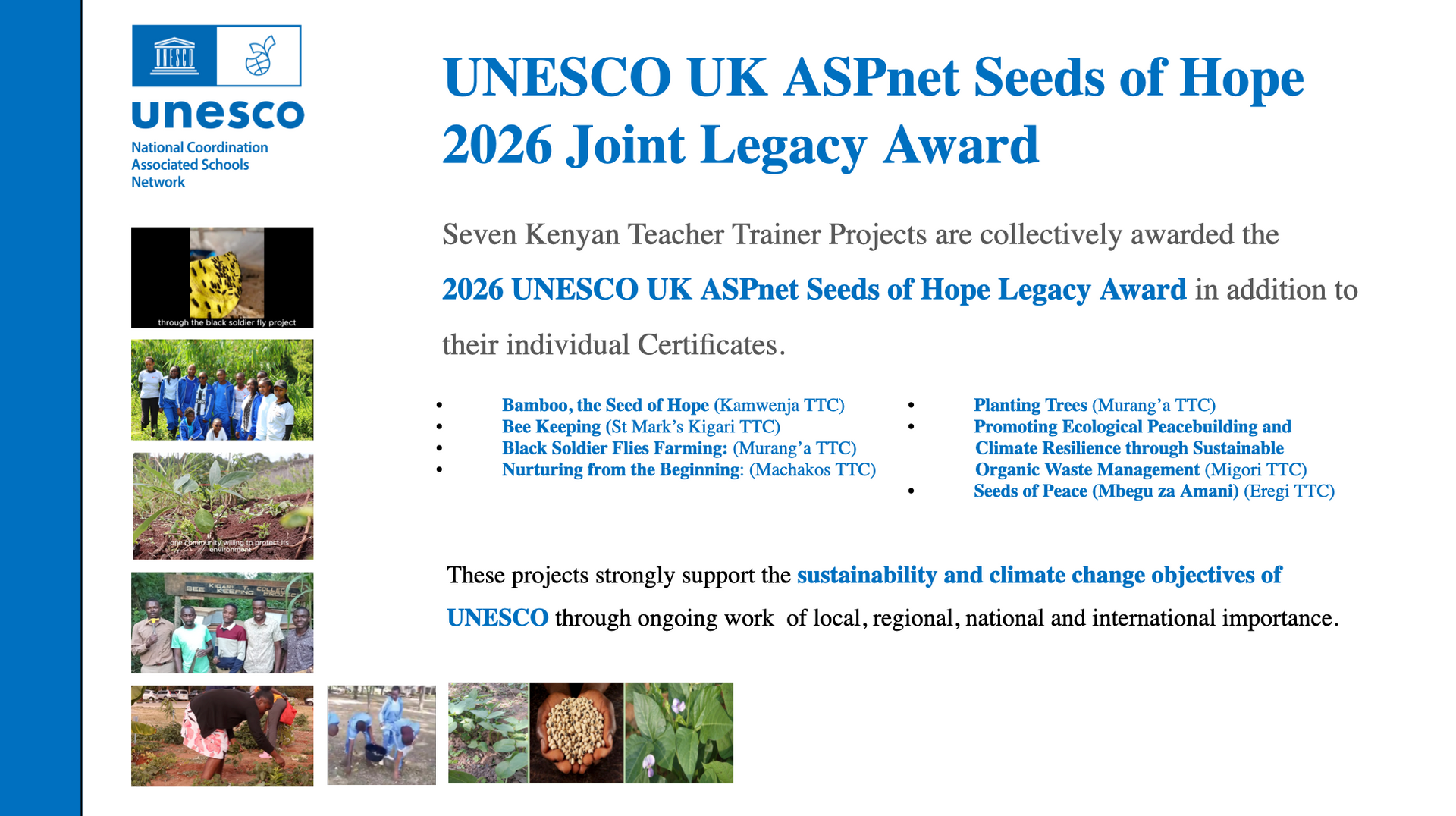
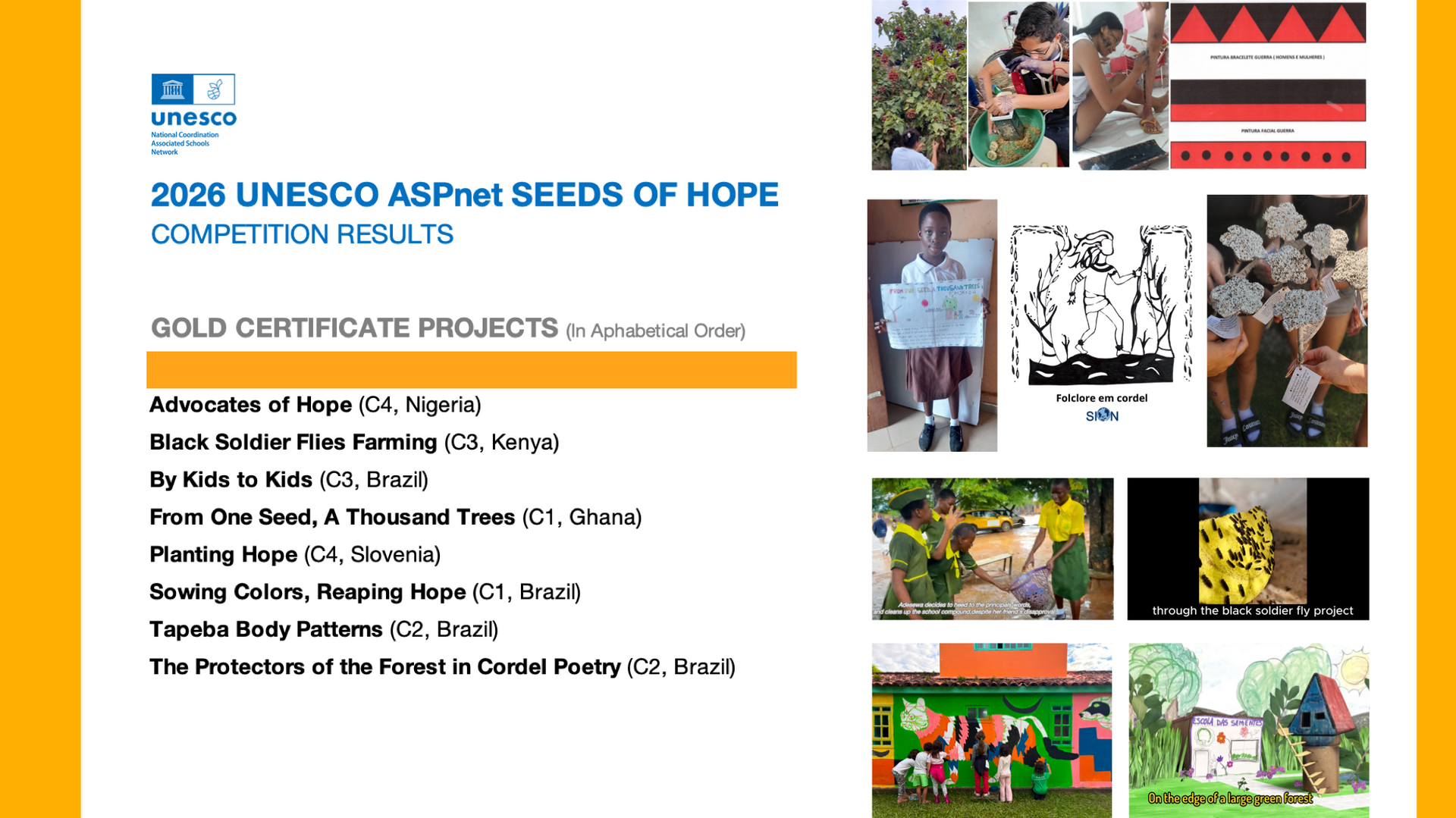
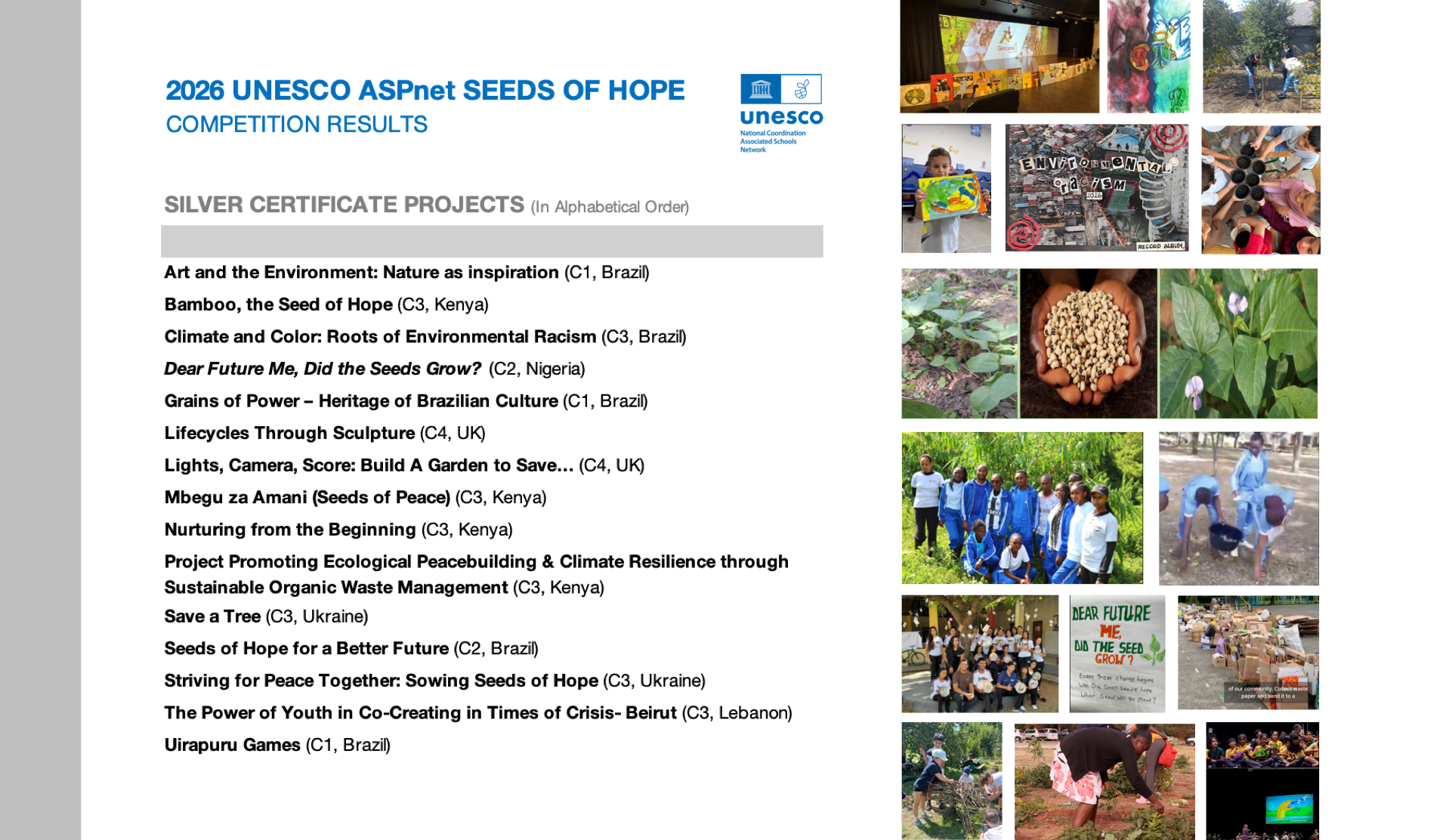
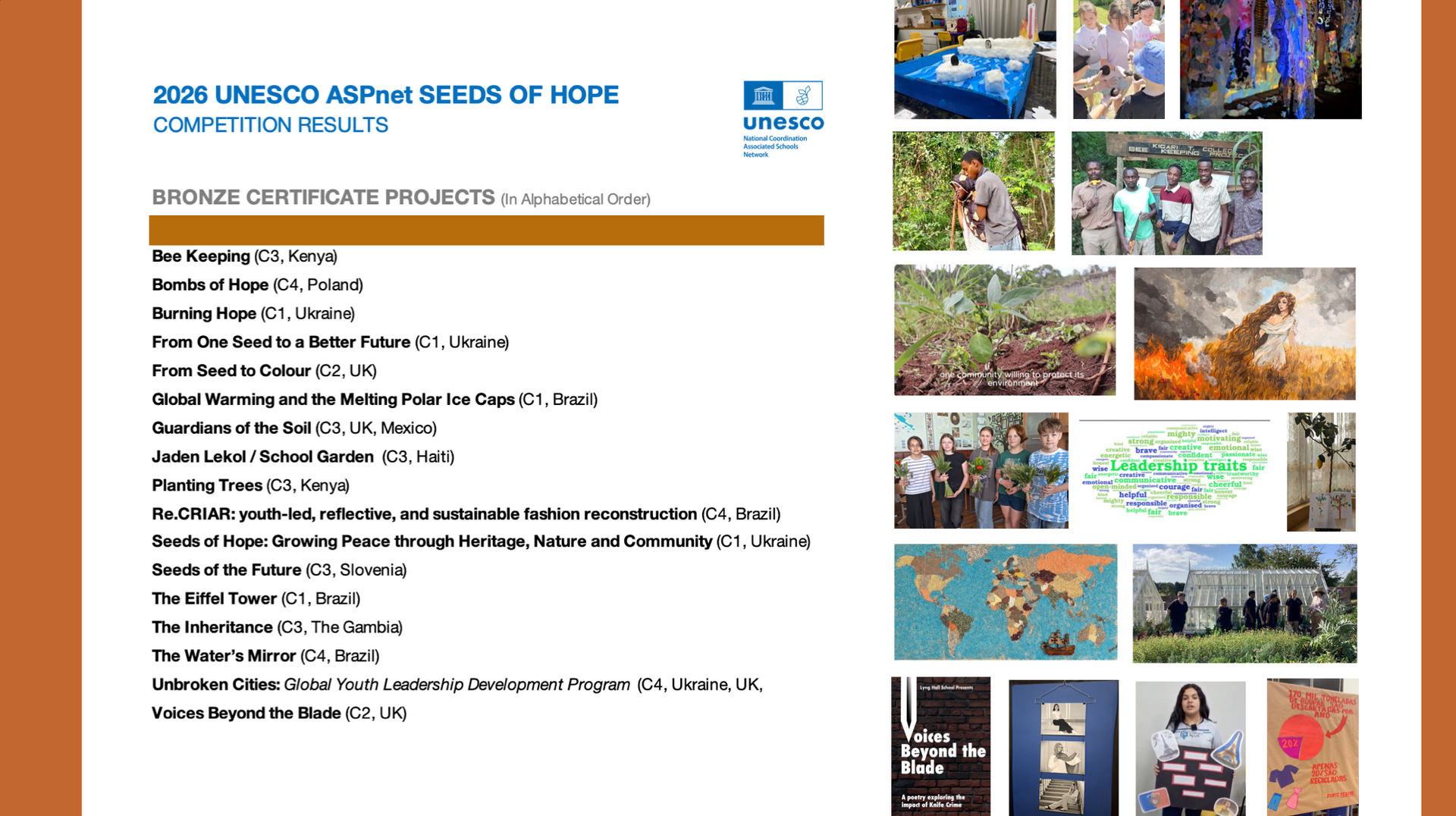
Eight winners from Brazil, Ghana, Kenya, Nigeria and Slovenia received Gold Certificates and shared the £5000 prize pot. Seven Kenyan Teacher Training College projects were also collectively recognised for projects that strongly support the sustainability and climate change objectives of UNESCO through ongoing work of local, regional, national and international importance, and received the 2026 UNESCO UK ASPnet Seeds of Hope Legacy Award.
The response to the Competition clearly demonstrates that it is the collective contribution of all projects promoting sustainability and tackling climate change locally, regionally, nationally and ultimately internationally that gives voice and engagement of young people around the world. The Global Map of Projects illustrates this central purpose of the initiative.
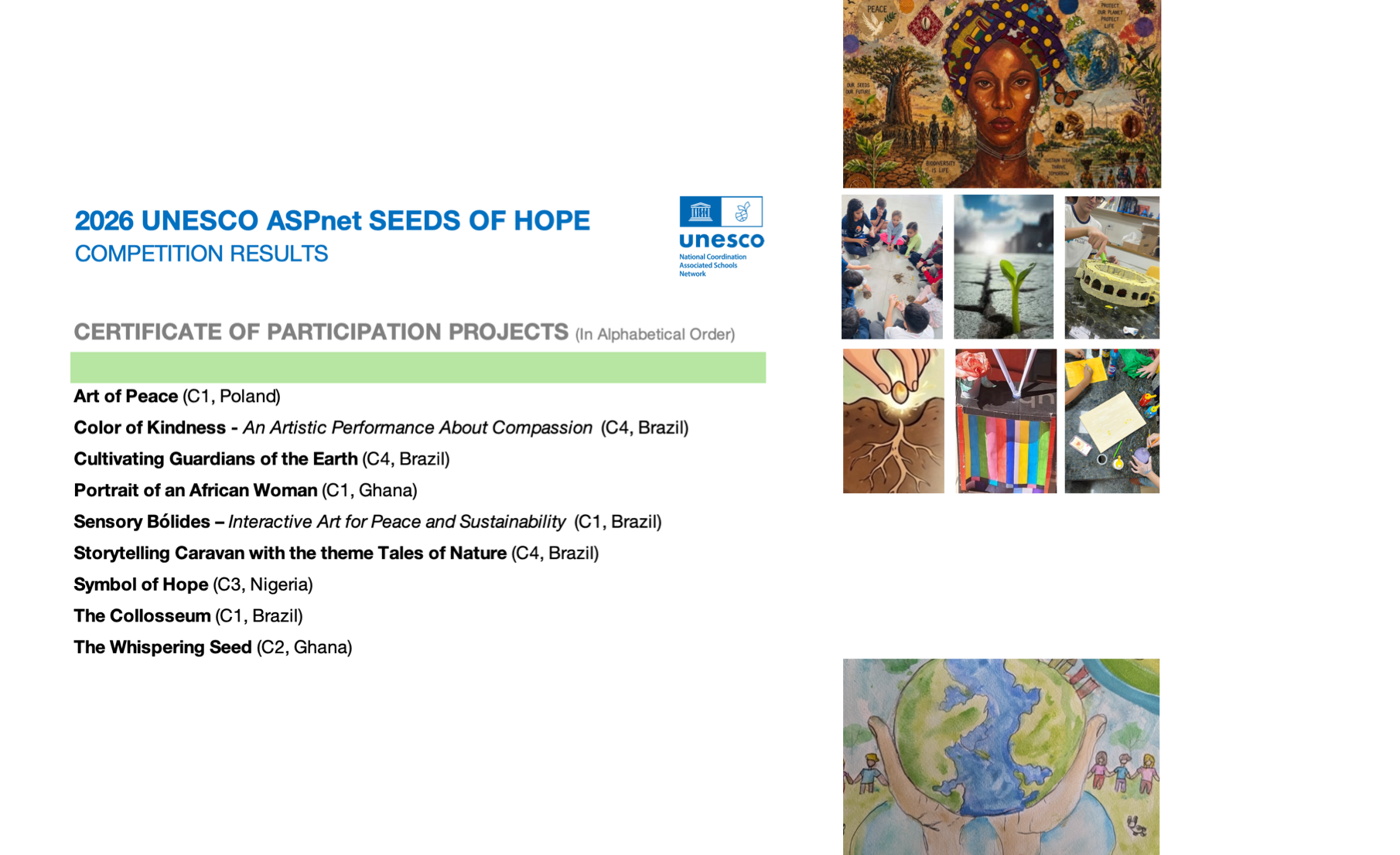
An impressive range of high-quality, creative and imaginative submissions were received, with projects that ranged from individual children’s projects (e.g. Ghana, Ukraine), class-based projects and whole school campaigns (e.g. Kenya, Poland, Slovenia, UK, Brazil), to projects that included collaborations with artists, local communities, and in some cases many schools across regions and with schools in other countries (Brazil, Kenya, Lebanon, UK, Ukraine).
Many young people, supported by teachers, artists, parents and local communities, used this collaborative engagement to tackle challenging community problems. These collaborative efforts resulted in Seeds of Hope projects, with at least 15 ongoing projects, that will have a lasting sustainability impact.
Whether it is the voice of one child or many millions, they are all saying the same thing – they care deeply about the world they will inherit, and that young people take their role and responsibility in ‘finding peace with ourselves and our planet’ seriously and urgently.
The next steps of the UNESCO UK ASPnet Seeds of Hope for a Better Future initiative are to ensure that it has a significant legacy and impact. We look forward to hearing even more voices of young people, and to seeing their engagement in these significant activities going forward.
For more information, please get in touch with Ann Beatty, UNESCO ASPnet National Co-ordinator
Ann.beatty@stevesinottfoundation.org.uk