Education in a Time of Coronavirus
Elizabeth Pennington is Communications Officer for Yesterday – Today - Tomorrow and a freelance Journalist. She plans to study a Masters Degree in International Development next year, with a focus on Education in Emergencies and War Crime.
*Names have been changed to protect the individuals’ identities.
When the first COVID-19 cases were announced last year, few expected such a Tsunami-like wave to follow. Now, almost ten months on, with approximately 30 million cases worldwide, and rising, in a WHO declared Pandemic, it is crucial that we do not ignore one of the most pressing global issues: children’s access to education.
In a recent campaign, Keeping Girls in the Picture, led by UNESCO, the pandemic could mean almost 11 million girls may never return to education. This places them at even greater risk of early child marriage and gender violence.
As the Communications Officer for a Global Education NGO, Yesterday- Today-Tomorrow (YTT), based in Paris, our team have seen firsthand the impact losing education has on a child’s well-being. Collectively, we have worked in over 40 refugee/migrant camps, centres and squats in over ten countries in Europe and North Africa, with hopes to expand further into conflict areas, where girls are at particular risk.
Since 2016, our research has led us to develop a Learning through Art & Theatre Approach focusing in two key areas: working in and for child/ youth populations in emergency situations, designing psychosocial support, children’s-rights and peace/capacity building programs and working within the formal school structure, were our programs promote inclusion, diversity and the reduction of prejudice/racism for children and teachers. These programs, in line with the United Nations 2030 Sustainable Development Goals, are adaptable to the local needs of the refugee, migrant and/or displaced populations.
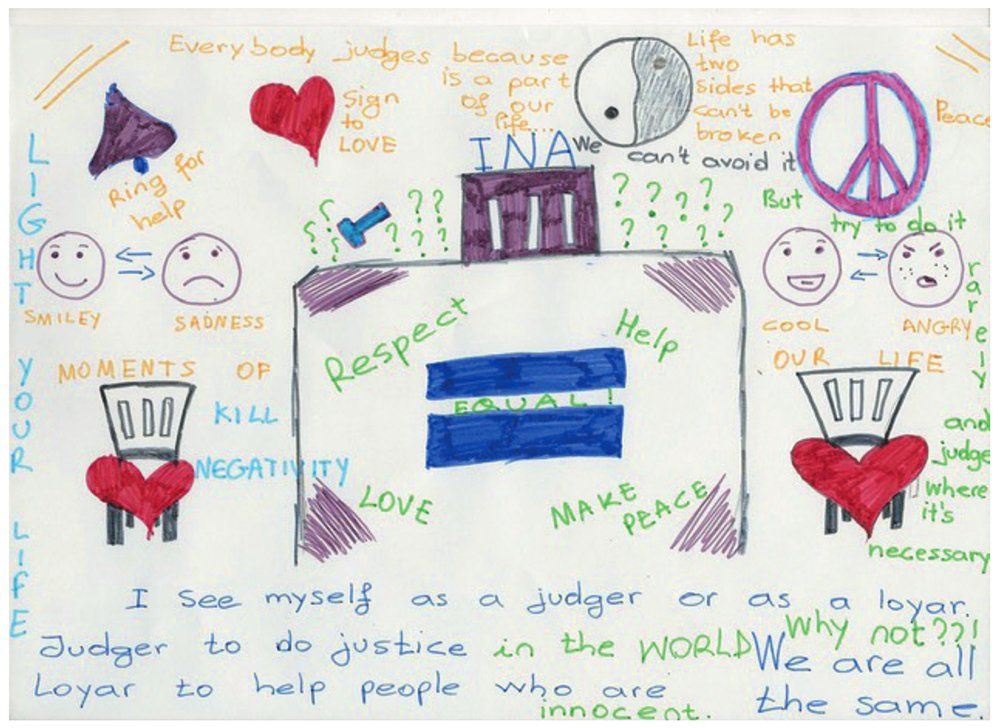
Through our psychosocial support workshops, participants are invited to draw their past (Yesterday), their present (Today) and their future lives (Tomorrow). These drawings, collected from thousands of individuals since 2016, aged between 2-70 years old, have allowed us to create our visual database, sharing their stories, irrespective of one’s spoken language.
Our organisation’s Founder, Bryan Mc Cormack said: “With COVID, it is the most fragile populations that are the most affected. (...) Refugee education is or at least should be a priority for the world for the simple reason that having over 70 million refugee/displaced persons, the majority of whom are children, means that we are talking about an enormous percentage of humanity. (...) humanity is everyone’s responsibility.”
Reflecting on the educational impact, I am reminded of a 14 year old Afghan refugee, Amal* who we met in Serbia in 2018. Now 16 and in Germany, she wants to become an author. Through her drawing, she explained how she uses her love of learning to block negativity in her life.
Or Malek*, a nine-year-old Iraqi-Kurdistan refugee, too young to fully understand her trauma, yet articulate enough to explain how she returned from Church to find her family decapitated by ISIS, their bodies hung from a hook on the tree in the garden of their Mosul home.
Now 11 and fluent in four languages, Malek wants to become a doctor, win a Nobel Peace Prize and help her community recover after ISIS occupation.
Malek, like so many young refugees I have met, is not allowing their past to define their future.
As a human right, every child must have the opportunity to engage in education. I believe that education changes lives and saves lives. There is still a grave misunderstanding about who refugees are. At Yesterday-Today-Tomorrow, I hope we can be a small part of the larger conversation on inclusive education for refugee and migrant children and for education in emergencies worldwide.
Elizabeth Pennington • March 17, 2021
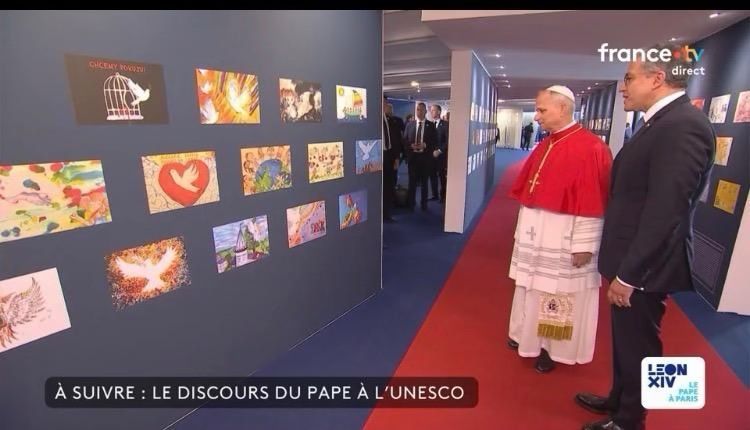
A moment to be proud of and a reminder of why young people’s voices matter. Today, artwork created by students from UNESCO ASPnet UK schools on the theme of peace was presented to Pope Leo XIV at UNESCO Headquarters in Paris, alongside artwork from young people in other countries. What an amazing opportunity for our students to have their creativity, ideas and hopes represented on an international stage. For me, this is what UNESCO ASPnet is about: creating opportunities for young people to connect across cultures, express themselves creatively, learn from one another and imagine a better future together. The power of young people’s creativity: their voices being part of an international conversation about education, peace, culture and our shared future. UNESCO’s programme for Pope Leo XIV’s visit specifically focused on education, artistic creation, AI, information integrity and peace. The work was part of a mural that brings together 80 original creations marking UNESCO’s 80th anniversary, produced as part of the "International Youth for Peace" competition organized by France TV and UNESCO.
Most of us want to leave the world a little better than we found it. Whether that's through the people we love, the values we pass on, or the causes we care about, we all hope our legacy will make a difference. One of the simplest ways to do that is by writing a will. This autumn, we are proud to be taking part in the Change Starts with a Will campaign, allowing our supporters to write or update their will free of charge through our trusted partner, Octopus Legacy. Why writing a will matters Writing a will isn't just about deciding who inherits your possessions. It's about making sure your wishes are respected and providing peace of mind for the people you care about. Having a will means you can: Protect the people you love. Make important decisions about your estate. Reduce uncertainty for your family. Leave a lasting gift to a cause that reflects your values. Many people put off writing a will, believing it's something to think about later in life. In reality, it's one of the most important documents you'll ever create. A legacy that supports education Steve Sinnott dedicated his life to championing education as a fundamental human right. His belief was simple but powerful: every child deserves the opportunity to learn, and every teacher deserves the support they need to inspire future generations. Today, we continue that mission by working with partners across the world to improve access to quality education, strengthen teaching and support communities where education can change lives. When you choose to leave a gift in your will to The Steve Sinnott Foundation, you're helping ensure that this work can continue for years to come. After taking care of family and friends, even a small gift could help provide learning opportunities, strengthen education systems and create brighter futures for generations to come. A gift that lasts beyond a lifetime Legacy gifts play an important role in helping charities plan for the future. Your support could help us continue investing in sustainable education projects, supporting teachers and ensuring more children have access to the education they deserve. It's a powerful way to ensure your values live on long into the future. Write your will for free As part of our Autumn 2026 campaign, we're offering supporters the opportunity to write or update their will free of charge through Octopus Legacy. There is no obligation to leave a gift to The Steve Sinnott Foundation, but we hope you'll consider remembering us after you've taken care of those closest to you. Together, we can continue Steve Sinnott's vision of a world where education changes lives. Find out more If you've been thinking about writing your will, there's never been a better time. Our free will service is available until 31 October 2026 , making it easy to protect the people you love while considering the lasting impact your legacy could have on education worldwide. https://octopuslegacy.com/online-will?channel=partner Change starts with a will. And together, we can help create a future where education is accessible to everyone.
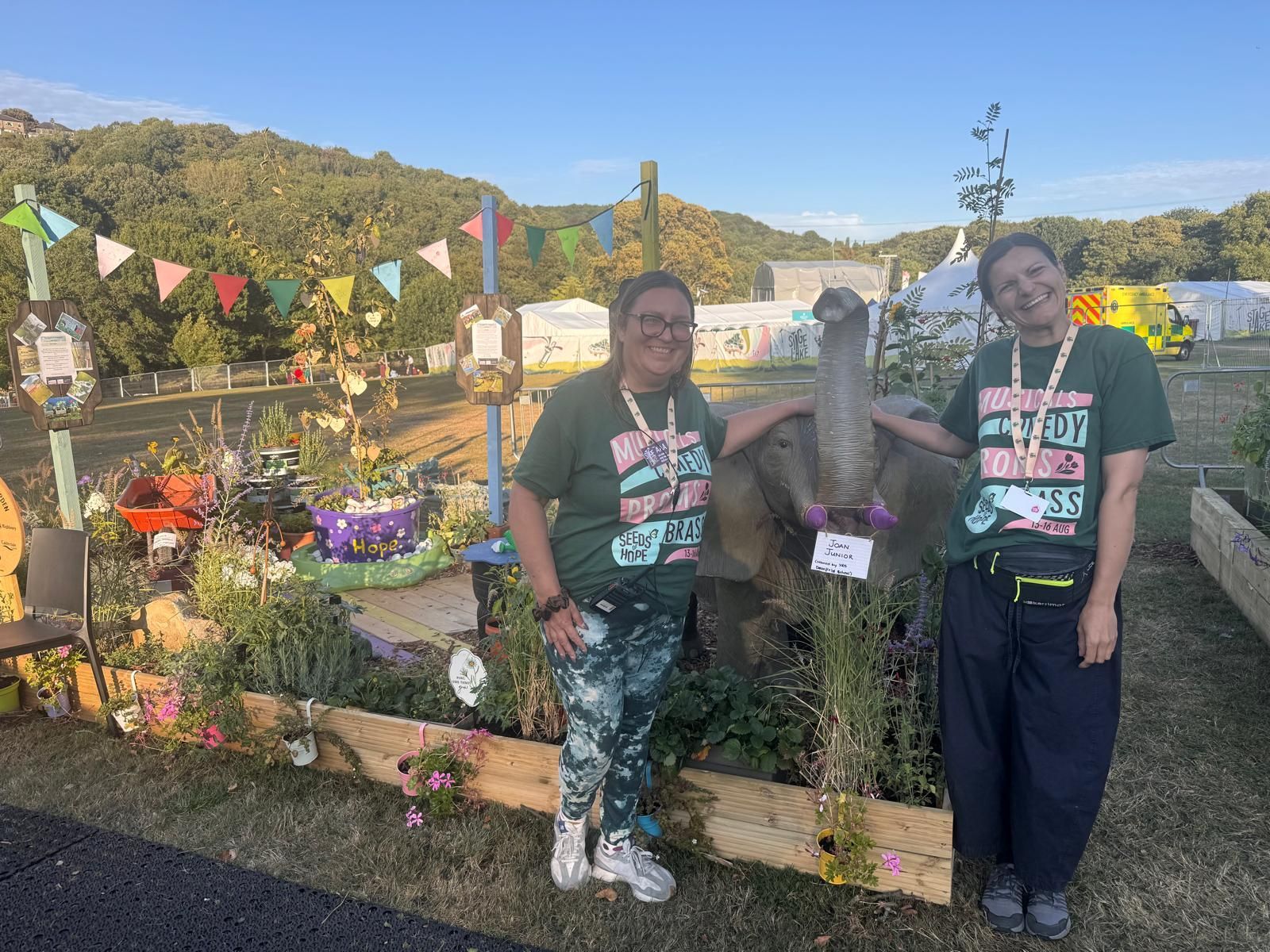
Seeds of Hope are everywhere! “I wasn't quite sure what to expect when I arrived at Stage at the Lake…” But it was special to meet all of the Calderdale team in person, who had brought this four-day event together so successfully. Sometimes an event stays with you long after the final performance has finished. My visit to Stage at the Lake at the beautiful Shibden Hall in Calderdale was one of those occasions. As UNESCO ASPnet UK Coordinator, I was delighted to be invited as a guest, but what I experienced was much more than simply attending an event. Here, in the grounds of a house steeped in history, the past, present and future seemed to meet. The English Chamber Orchestra filled the setting with music, Northern Ballet brought movement and storytelling to life, and throughout there was a wonderful sense of creativity, community and possibility. And then there were the parklets; a unique gardening festival at Shibden Park celebrating community, creativity and the power of nature to bring people together. At its heart was a specially commissioned trail of ten micro show gardens, designed and built by community groups from across Calderdale. It was wonderful to see spaces where ideas, conversations and creativity were flourishing and connecting through Seeds of Hope. I cannot wait to see them transported to their ‘forever homes’. Standing there, I found myself thinking about what we mean when we talk about education, culture and hope.