Cycling to School in The Gambia

Last week (9th May) we launched our yearly ‘cycling to school’ project in The Gambia.


The Gambia Teachers Union (GTU) and The Steve Sinnott Foundation (SSF) have been in partnership since 2017 and have established a strong relationship. SSF have funded and supported several projects with GTU such as training teachers on making reusable period pads, gender based violence prevention as well as counselling training to name a few.


Cycling to School

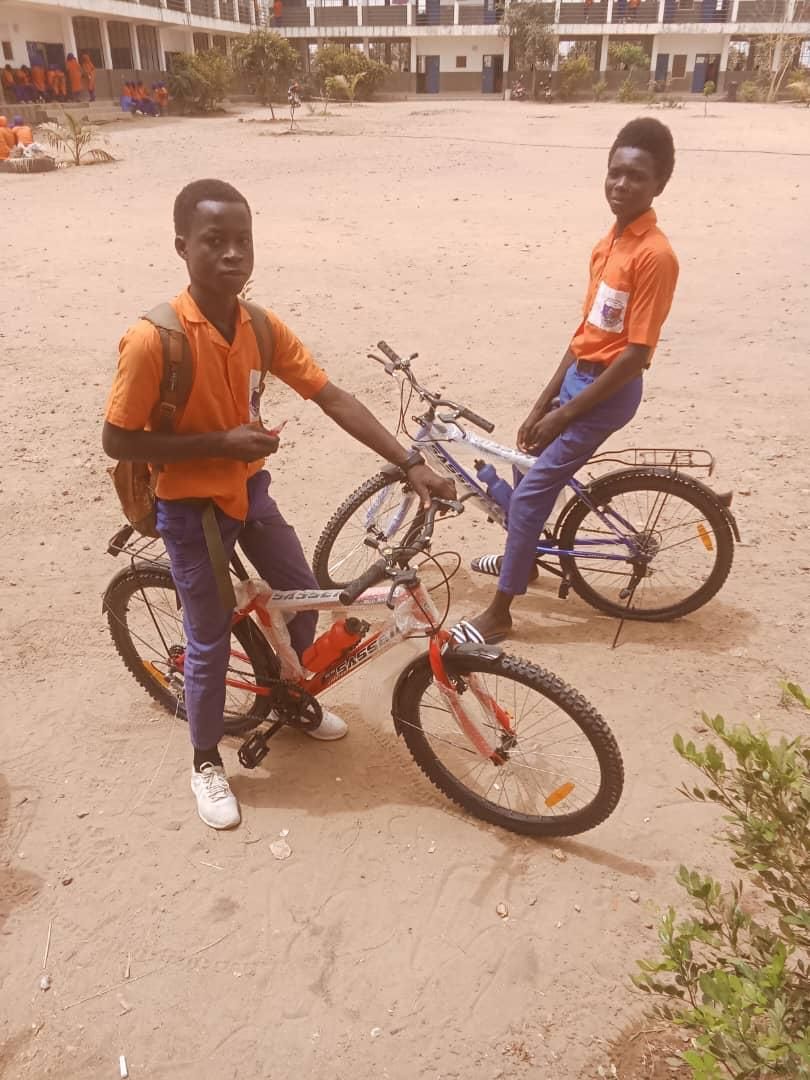
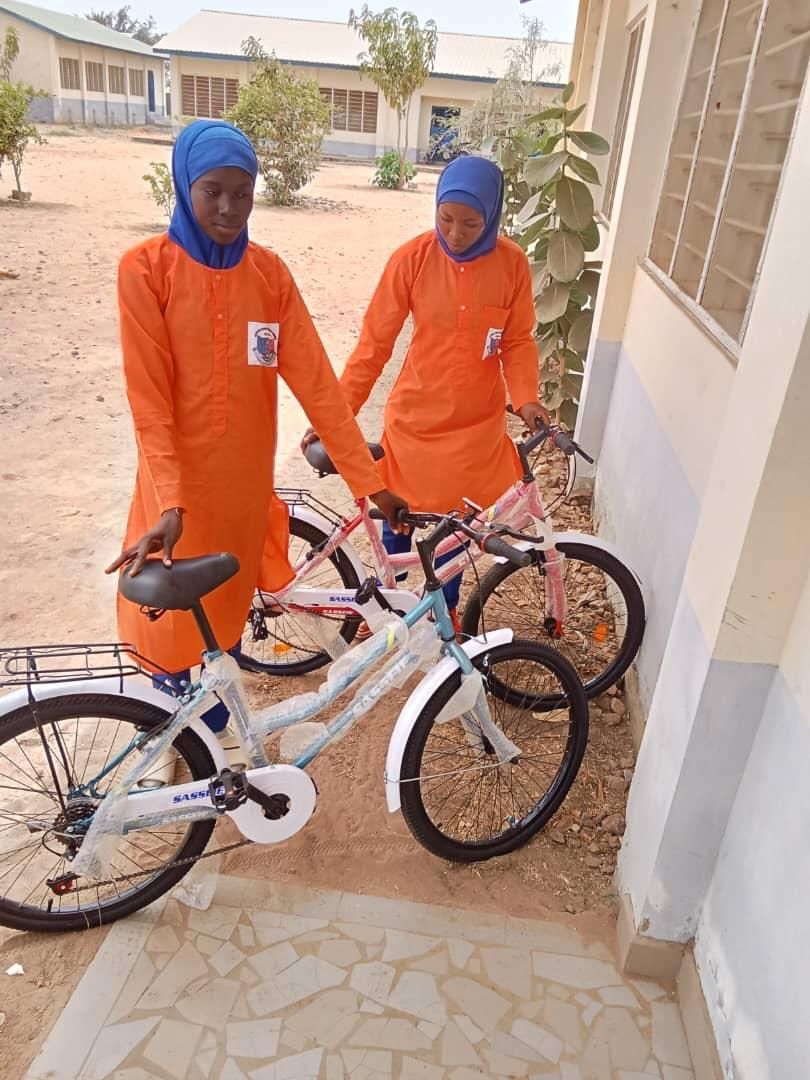
GTU have started the distribution of bicycles in Senior Secondary Schools, starting in Sanyang.


Long journeys to school result in students arriving late, being too tired to engage and learn and some students just don’t enrol at all due to the distance they have to walk. Walking long distances in the heat can also be dangerous. These bicycles stop students having to walk several miles each day to access their nearest school whilst providing a safe journey to school.


When the students receive these bicycles, they immediately share their happiness and joy with their teachers and peers.

They are keen to get cycling and enable themselves to get to school and get the best out of their education.


“Thank you to the Steve Sinnott Foundation, I can now cycle to school everyday!”


Get involved

If you want to get involved and contribute towards this project you can check out our digital gifts and for £75 you are providing the gift of cycling to school.


Nicolet Nguyen • May 16, 2025
By Steve Sinnott January 16, 2026
We have partnered with Octopus Legacies to offer all of our supporters a free and easily accessible way of writing your will. When you write your will, you’re shaping the story of your life and you have the power to make that story continue. By taking up our free will offer and leaving a gift to The Steve Sinnott Foundation, you can help ensure that children and teachers around the world continue to have access to the education and training that they need. The offer of a free will helps you to plan for the future with ease and reassurance, ensuring loved ones are cared for while also creating a meaningful legacy. It’s a simple, accessible way to do something that feels personally fulfilling and socially impactful. Leave a legacy — help education flourish for generations to come As part of the free will writing process, we hope you will consider leaving a legacy gift to the Foundation. Leaving a legacy gift ensures that your values live on by supporting the Foundation’s mission to advance quality education for all. Your gift can help transform lives, enabling children, teachers, and communities around the world to access learning opportunities that might otherwise be out of reach and make a lasting impact on global education. Why leave a legacy gift? 1. Make a lasting impact on global education Your legacy can open classroom doors, train teachers, and empower communities through the gift of learning. Every legacy, large or small, helps to build a world where everyone has the chance to learn and thrive. 2. Reflect your values and inspire others Your will is a reflection of what matters most to you. By including The Steve Sinnott Foundation, supporters can express their belief in fairness, opportunity, and the power of education to change lives long after their own lifetime and inspire future generations. 3. Peace of mind with a free, professional will Through our free will offer, you can write or update your will with trusted professionals at no cost to you. It’s an easy, reassuring way to care for your loved ones and make a meaningful difference to others at the same time. Your gift will: Provide access to quality education for all children Support teachers and educators around the world Promote gender equality and inclusive education Strengthen communities through knowledge and opportunity Take the next step Leaving a legacy is simple and it starts with a conversation. Find out more about our free will offer Contact our friendly team at www.octopuslegacy.com/will/ssf to learn how you can create your will and make a lasting difference through education.
By Oliver Mawhinney, January 16, 2026
In its 2024 election manifesto, the Labour Party pledged to, ‘...rebuild Britain’s reputation on international development with a new approach based on genuine respect and partnership with the Global South’. The National Education Union (NEU) warmly welcomed this new approach and the opportunities it presented to tackle the global teacher shortage. Just as thousands of additional teachers are required in the UK, millions more teachers are needed globally. 44 million additional teachers must be recruited by 2030 to meet the Sustainable Development Goals for education, including 15 million in sub-Saharan Africa alone. A promise in peril Just over a year into office, the Labour government’s commitment to rebuilding trust and relationships with the Global South is in jeopardy. Prime Minister Keir Starmer’s decision to reduce the UK aid budget to 0.3% of gross national income by 2027 — to fund increased defence spending — has been condemned by humanitarian organisations as, ‘...cruel and shameful.’ Governments across the Global South, including a group of African education ministers, have also urged the UK to rethink its cuts. The consequences of UK aid spending retreating to its lowest level in almost thirty years are already being felt. Schools are closing, teachers are going unpaid, and students are at risk of dropping out of education permanently. In South Sudan, the Foreign Commonwealth and Development Office (FCDO) has cancelled its flagship girls’ education programme, which had quadrupled girls’ enrolment in school, reaching over 1.2 million girls with cash transfers, helping them to enrol in school and complete their secondary education. Rethinking the cuts As the UK redefines its aid spending priorities, the NEU is calling on the UK government to sustain funding for education in emergencies and prioritise investment in teachers in emergency contexts. Evidence shows that teachers are the single most important factor in children’s learning and recovery. In emergencies their role is even more vital. In addition to teaching, they are frontline professionals, supporting children’s psychological needs and fostering an environment of safety, belonging and routine. Despite their indispensable role, teachers in crisis contexts face severe challenges including low or no pay, threats to their safety and wellbeing, and little or no access to professional development and support. Pupil-teacher ratios often exceed 80:1 or even 120:1, and there is an acute shortage of female teachers. Prioritise teachers to unlock education in emergencies To mark World Teachers’ Day 2025, the NEU published a new policy briefing urging the UK Government to prioritise teachers across its policy, programming and financing. This means committing to advance the rights, working conditions, and supply of qualified teachers in emergency and protracted crises, ensuring that they are trained, paid, protected, and supported. Achieving this is impossible without genuine international partnership. Fragile, conflict-affected, and refugee-hosting countries need sustained cooperation and support to implement strategies that address teacher shortages and uphold teachers’ rights. The role of the wider international community is also crucial. The UN High-Level Panel on the Teaching Profession, established by the Secretary-General, highlighted the urgent need for donors to work together on sustainable, long-term mechanisms to ensure the timely and adequate payment of teacher salaries in crises. The UK Government has a key role to play, by providing both financial and technical support. To unlock the transformative power of education, in Palestine, Ukraine, and every place where children’s futures hang in the balance, we must put teachers and partnerships at the heart of the UK’s global education and development agenda. Read the NEU’s new policy briefing at www.neu.org.uk/about/international BY Oliver Mawhinney International Policy Specialist at the National Education Union
By Ann Beatty October 13, 2025
In our continued commitment to ensuring quality and inclusive education for every child, we’ve taken our advocacy to a new level by empowering the next generation to lead the conversation. In partnership with The Gambia Teachers’ Union, we recently convened The Foundation’s Young Ambassadors for a vibrant day of engagement dedicated to promoting the right to education for all. The event brought together passionate students from selected senior secondary schools across Region 1, including St. John’s School for the Deaf, to explore what it truly means to make education inclusive, equitable, and accessible to every learner.