Aspirations for a new start in a new year, 2023 - let’s change lives!

Have you started the year setting goals and aspirations for the year ahead? Every year we renew our promise to help change the lives of children around the world through access to education.

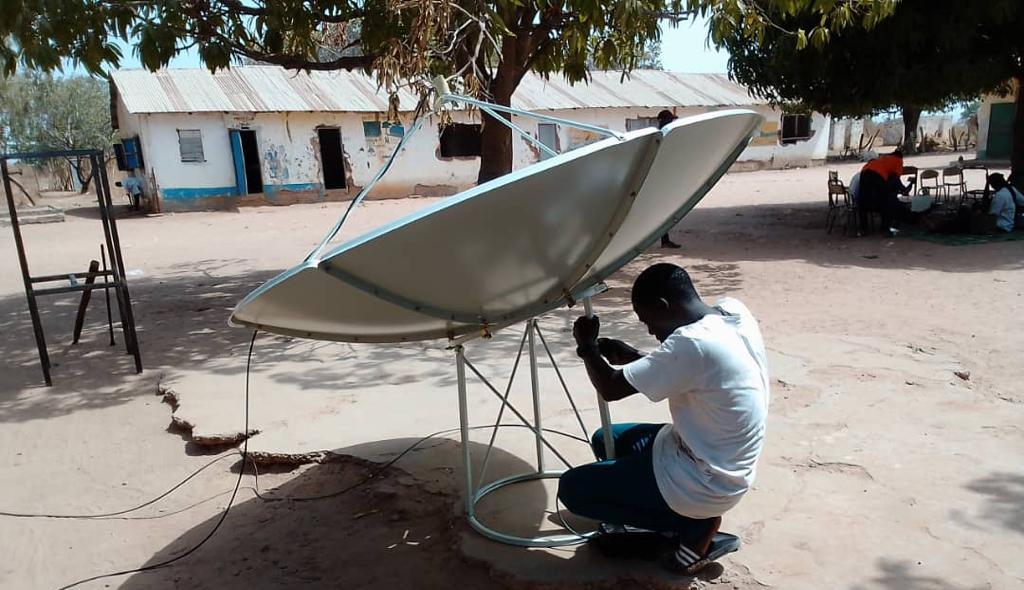
Can you imagine how you would keep in touch with your family and friends or do your work if you didn’t have access to WIFI? Last year we were able to support thousands of children with access to education through the development of digital classrooms and resource centres to provide access to learning resources and training for educators to improve teaching and learning. We will continue this year.


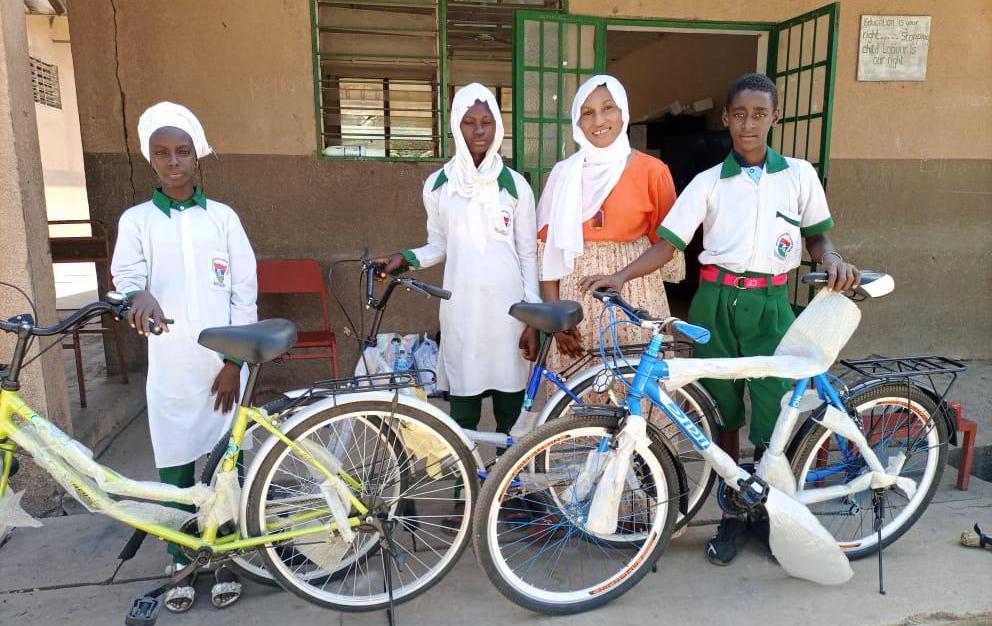
Can you imagine how tired you would be after walking 2 hours to school in the morning? Yet how keen are these children to learn, that they will do this. Last year we provided bicycles in The Gambia to ensure students can travel to school in a safe and timely manor. We are proud of everything we have achieved together, and we will continue this year.


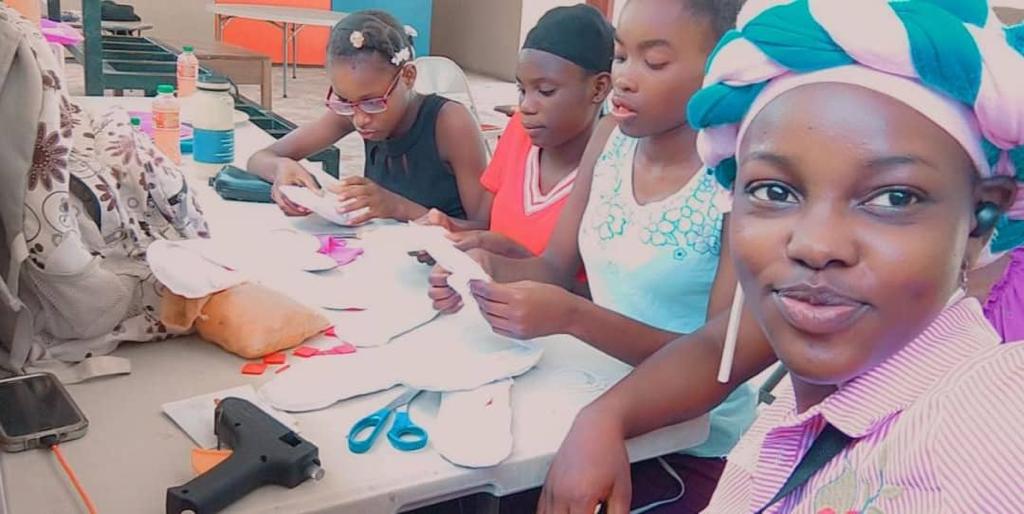
Can you imagine reaching and age when you can no longer go to school every day because of a natural bodily function that you have no support to manage easily? We were able to support thousands of women and girls with training to make reusable period pads and manage menstrual health with dignity and pride so they can continue going to school every day. This has raised awareness of a wider range of issues preventing women and girls from accessing education, so we have been supporting training in gender-based violence education too.


By providing access to education in Cuba, Haiti, Sierra Leone, The Gambia, Malawi, Uganda, Guinea Bissau, and many other places around the world we are changing lives together.


Before you launch into your new year plans and resolutions, please support us by sharing this post and the message that education matters.


  • That every child should have access to trained teachers and good quality resources.


  • That no child should miss school because they do not have transport to get to school.


  • That no girl, or young woman should miss school because she has her period.


  • That no woman or girl should ever have to experience gender inequality and gender-based violence.


Thank you to all of our supporters, donors, partners, volunteers, ambassadors and staff for everything you did to make this work possible in 2022. With your support today we can provide access to education for thousands more students in 2023. With your support we can reach thousands more women and girls in 2023. 


We want to express our thanks and appreciation for your support for this coming year.


What a wonderful legacy that would be for every year ahead.


Steve Sinnott • January 10, 2023
By Ann Beatty June 1, 2026
On Friday evening ( 29 May, 7.00 pm The Actors Church Covent Garden) we had the pleasure of listening to this very special concert, bringing together the Choir of King's College London and the Princeton High School Orchestra in a celebration of international friendship, collaboration, and shared values. This project reflects a commitment to peace, sustainability, equality, and cultural exchange, uniting young musicians from the United Kingdom and the United States through the universal language of music.
By Ann Beatty May 20, 2026
How a simple act of practical solidarity is transforming the journey to school in The Gambia’s Central River Region North Policies have been written. Schools have been built. Yet for many children in The Gambia’s Central River Region North, access to education is still measured in kilometres, not opportunity. 
By Laura Griffin May 13, 2026
‘In a single hour vast tracts of shaded woodland became a jumble of torn trees and upturned soil, exposed to the glare of the summer sun. Such land-clearing events are rare, but forests exhibit remarkable resilience in the face of disaster. I’m told that the Chinese character for ‘catastrophe’ is the same as that which represents the word ‘opportunity’. And, the blowdown, while catastrophic, presented opportunities for many species.’ (Wall Kimmerer, 2003: 89). In the context of a volatile, uncertain, complex, and ambiguous world (Stein, 2021) what kinds of education for hope might support children’s and young people’s critical engagement in local and global issues? In the spirit of exploring the possibilities of hope further, this short article focuses on the area of global citizenship and sustainabilityrelated education. It will briefly open by sharing commonalities across pedagogical approaches that take up the concept and act of hope more critically, and close by offering reflective questions for educators, with suggestions for further reading. Perhaps it is a kind of hope that is grounded in the present, in future reimagining(s), in ethical solidarity, and an acknowledgement of our deep entanglement with the living metabolism of planet earth 1 our singular home (UNESCO, 2021); a hope that engages with complex root causes and lived realities of multiple overlapping crises in critically reflexive and contextually relevant ways. As McCloskey notes, ‘Hope can fire our collective imagination and critical consciousness as a mainspring to activism and intervention in the world.’ (2025: 3). Commonalities across critical pedagogical approaches to hope include: Acknowledging the context of a ‘seamless single story of progress, development and human evolution’ (Andreotti, V.D.O., 2021b Relating to social and ecological justice and the wellbeing of people and planet Using participatory, action-orientated and inquiry-based learning processes Exploring diverse worldviews and perspectives Practising grounding in the present with opening up possibilities for change (relational, embodied, response-able 2 ) Experiencing ‘struggle’ in different forms (dialogical, selfreflexive, open-ended) Engaging individual and collective agency, action and activism Looking for lifelong and life-wide learning and unlearning. 1 See ‘Co-sensing with Radical Tenderness’, in Machado de Oliveira Andreotti. 2021a 2 See ‘Crossing Borders’ in 2 Depth Education “Depth Education and the Possibility of GCE Otherwise, 2021b. Source: Andreotti, V. 2021a & 2021b., Atif, A. (2025)., Bourn, D. 2021., Bryan. A. and Mochizuki,Y., 2024., Giroux, H.A. 2025., Meade, E. 2025. Whilst engaging in the concept and act of hope more critically reflect upon: What kinds of education for hope might you explore further and why? How might you provide generative spaces for engaging in diverse worldviews and perspectives? In what ways can you facilitate individual and collective agency? How might you support learners’ practice grounding in the present in order to relate differently? In what ways can you support learners in navigating complex root causes and lived realities of local and global issues? As Chief Ninawa Hini Kui affirms, ‘The future depends much less on the images we project ahead than on our capacity to repair relations and build relationships differently in the present.’ (Andreotti et al, 2023: 73. An invitation for further reading: Transformative Learning for a Sustainable Future . d’Abreu, C., Belgeonne, C., Bourn, D. and Hatley, J. (2025) ‘Transformative Learning for a Sustainable Future’. DERC Research Paper 24. London: UCL Institute of Education. Hospicing Modernity: facing humanity’s wrongs and the implications for social activism. Machado de Oliveira Andreotti, V. (2021a) ‘Hospicing Modernity: facing humanity’s wrongs and the implications for social activism’ , London: Penguin Random House. Development Education and Hope . McCloskey, S. (2025). (ed) ‘Development Education and Hope’. ‘Policy and Practice: A Development Education Review’ , Vol. 41, Autumn. Centre for Global Education, Belfast. Link to and download the full reference list here